
7 Security Checks to Run Before Joining Poker Websites
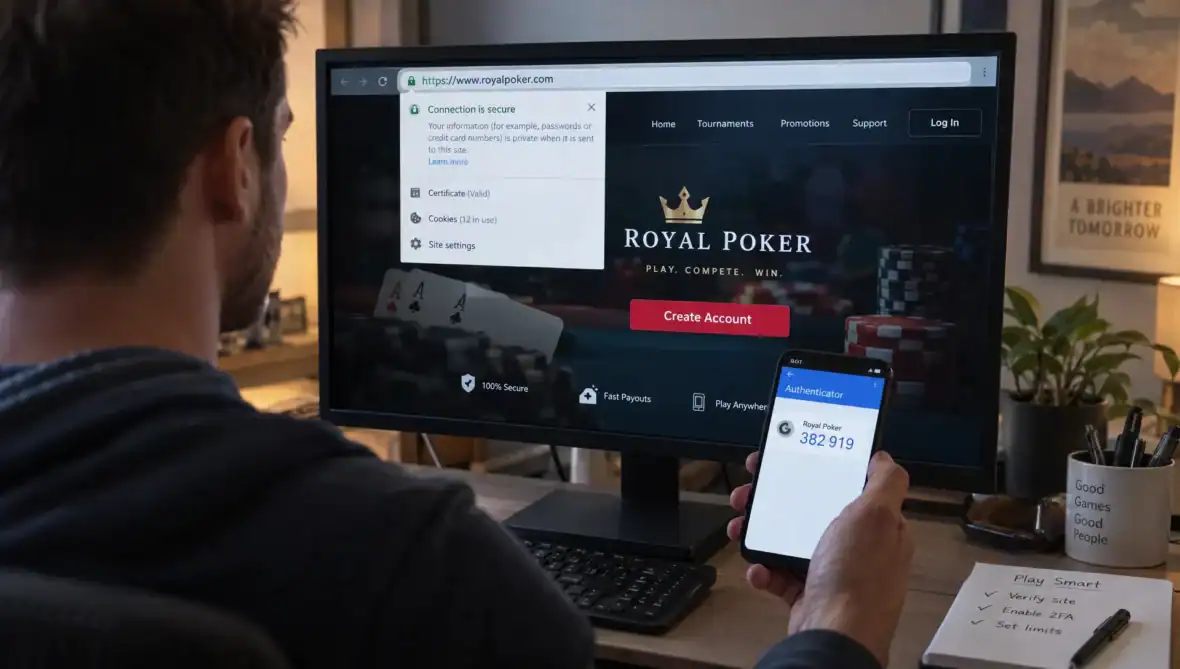
Before joining poker websites, check the operator’s authorization, website identity, account controls, game-integrity policies, withdrawal terms, privacy practices and account-exit tools. A large bonus cannot compensate for a mismatched license or an unexplained restriction on withdrawals. The practical test is whether you can verify who holds your money, protect access to it and understand how to leave.
Run these checks before depositing or uploading identity documents. Some involve public records; others require inspecting settings or asking support a precise question. An unresolved legal or identity mismatch is a reason to stop, not something to balance against better rakeback.
Your pre-registration security checklist
Keep a brief record of what you checked, including the date and relevant policy pages. Terms and operating permissions can change.
| Check | Evidence to look for | Warning sign |
|---|---|---|
| Operator and authorization | Official register entry matching the operator and permitted activity | A badge that cannot be independently verified |
| Website and software | Confirmed domain and legitimate download source | Lookalike address or unexplained installer |
| Account access | Strong authentication and clear recovery procedures | Requests for passwords or authentication codes |
| Game integrity | Specific rules and an accessible reporting process | Fairness claims without a defined scope |
| Money handling | Clear withdrawal, fee and customer-fund terms | Extra payments demanded to release funds |
| Privacy and support | Documented data handling and secure upload process | Sensitive documents requested through unverified messages |
| Exit controls | Accessible limits, closure and self-exclusion information | No clear way to restrict or end play |
1. Verify who operates poker websites and where they are authorized
Start with the legal entity named in the terms, not just the brand in the logo. Record its company name, claimed regulator, license number and approved website address where available. A familiar brand can have different operators serving different markets.
Open the regulator’s website independently and search its official records. Confirm that the authorization covers the relevant gambling activity, rather than assuming any gambling license covers peer-to-peer poker. Where the register lists domains, compare the complete address with the site you intend to use.
For US players, location matters. The Michigan Gaming Control Board is an example of a state authority providing official gambling information. Use the authority responsible for your location and check its current operator information. A foreign license does not establish permission to offer real-money poker in your state.
Separate access from authorization
A working registration page, accepted US payment card or successful app installation does not establish legal availability. Physical location requirements can also differ from residency requirements. Do not bypass location checks with a VPN or inaccurate account details.
Rakeback Bible’s guide to choosing poker sites by US state explains that distinction in more detail. Treat comparison articles as starting points, not certification.
Also, distinguish real-money poker from free-play and sweepstakes models. Free-play can still involve privacy risks, while sweepstakes terminology does not establish legality everywhere. When poker websites offer several models under similar branding, verify the rules and operator for the exact product you would join.
Pass condition: The operator, domain, activity and location eligibility agree across the relevant official records and published terms. If they do not, pause registration until the discrepancy is resolved.
2. Confirm the domain, connection and software source
Lookalike websites and fake support accounts can imitate a legitimate room without compromising the real operator. Check the hostname carefully, including misspellings, extra words and misleading subdomains. A brand name appearing somewhere in an address does not mean that brand controls the website.
Navigate from a verified source rather than a sponsored search result, unsolicited message or social-media reply. Once confirmed, bookmark the address. On mobile, follow the operator’s verified download route and inspect the developer information before installing anything.
HTTPS protects the connection between your device and the website. It does not prove the operator is trustworthy, financially sound or authorized. Scam sites can also obtain certificates. Conversely, a browser certificate warning is a reason to stop, not an inconvenience to bypass.
Inspect the installation request
Legitimate software should not require unexplained access to unrelated parts of your device. Review permissions and investigate any instruction to disable antivirus protection, install an unknown browser extension or run a remote-access utility.
Some poker websites distribute desktop clients directly, so an installer outside an app store is not automatically fraudulent. The important questions are whether it came from the verified operator and whether security warnings or publisher details create an unresolved mismatch.
If an installer appears suspicious, do not experiment on the device that holds your banking credentials. Contact the operator through an independently verified channel and ask it to confirm the exact download location and expected publisher. Keep your operating system and browser updated before attempting installation.
The FTC’s phishing guidance recommends contacting a company through a website or phone number you already know is genuine rather than relying on details inside a suspicious message. Apply that rule to account alerts, bonus offers and supposed withdrawal problems.
Pass condition: You can establish a consistent path from the verified operator to the website, installer and support channel without dismissing unexplained warnings.
3. Test account protection and recovery controls
Before funding an account, use a unique password stored in a password manager. Reusing a password exposes the account if another service suffers a breach. Protect the associated email account just as carefully, because password resets and security alerts often arrive there.
Check which multi-factor authentication methods are available. Enable the strongest practical option the room supports, such as an authenticator app or security key. Store recovery codes somewhere secure and separate from the device used for everyday play.
When comparing poker websites, inspect what happens after login, too. Can you review active sessions, recognize recent access or sign out other devices? Do password and withdrawal-setting changes trigger notifications? These controls are useful, although their availability varies and the absence of one feature is not proof of fraud.
Ask how recovery works
Account recovery deserves the same scrutiny as login security. Ask support what happens if you lose your phone or no longer have access to your registered email. You need a documented process, not a promise that an agent can simply bypass verification.
Check whether sensitive changes require fresh authentication. An account that stays logged in indefinitely on a shared device can remain exposed even when its password is strong. Use device screen locks and avoid saving credentials on public or borrowed computers.
Never give an agent your password, authenticator code, recovery code or cryptocurrency seed phrase. Support may need information to identify your account, but these secrets can authorize access or transactions. A request to disclose them is a serious warning.
Do not deliberately trigger repeated failed logins or try to defeat security controls as a test. Inspect the available settings and ask direct questions instead. Save the operator’s official account-compromise reporting route somewhere you can access without logging in.
Pass condition: You can secure both the poker account and its recovery email, understand the recovery procedure and locate an official route for reporting unauthorized access.
4. Examine game-integrity claims beyond the fairness badge
Protecting your login is only one part of security. In player-versus-player poker, collusion, prohibited automation, account sharing and real-time assistance can affect the games themselves. Read the operator’s rules for prohibited conduct and software before playing.
Look for a reporting process that accepts useful details such as hand identifiers, tournament numbers and approximate times. An operator need not disclose detection methods that would help cheaters evade them, but players should be able to understand what conduct is banned and how concerns are submitted.
Claims that poker websites are “certified” need context. A test of random card generation does not, by itself, demonstrate effective bot detection, customer-fund protection or reliable withdrawals. Check the named testing organization, report date, applicable product and what the assessment actually covered.
Distinguish evidence from reassurance
A logo that links only to a marketing page offers little independent confirmation. Where a testing organization maintains a public verification service, use it. If the claim cannot be checked, ask for a reference that identifies the tested operator and system.
Also review how the room describes investigations and potential remedies. Does it explain how suspected cheating should be reported? Does it have a policy addressing affected players? Avoid treating a broad statement about “zero tolerance” as a substitute for operational detail.
Player complaints can suggest questions to investigate, but they are not verdicts. Losing sessions and unusual hands are not proof that a game is manipulated. Give more weight to documented regulatory action, reproducible account problems and specific inconsistencies in published policies.
Check tool restrictions even if you use ordinary study software. A tracker, heads-up display or reference tool permitted elsewhere may breach this room’s rules during play. Account sanctions can arise from misunderstanding those restrictions rather than from a compromised account.
Pass condition: The room makes specific, checkable claims and provides understandable conduct rules and a usable reporting channel. Do not expect any operator to guarantee cheating never occurs.
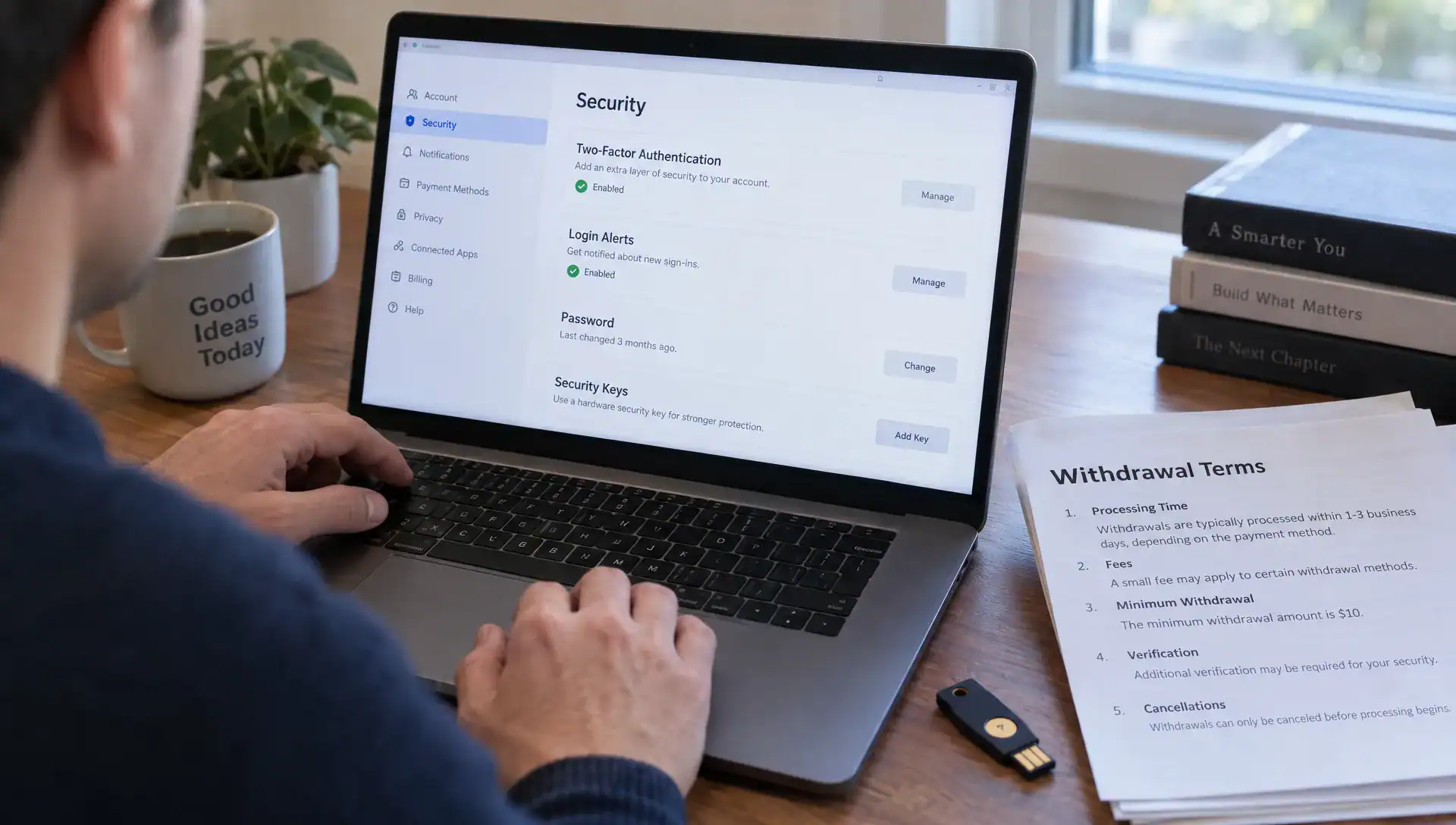
5. Trace how deposits, balances and withdrawals are handled
Read the cashier rules before selecting a payment method. Confirm withdrawal minimums, maximums, fees, supported currencies and any requirement to return funds through a particular method. Separate the operator’s processing time from the bank or payment provider’s delivery time.
Check whether your chosen deposit method supports withdrawals. If not, establish the alternative before transferring money. Name-matching requirements also matter: using someone else’s card or wallet can create verification problems and may violate account terms.
The safest way to compare poker websites is to examine money-out rules alongside money-in convenience. An instant deposit says nothing about withdrawal speed, and a prominently advertised processing window may begin only after verification or approval.
Read the restrictions behind the headline
Look for the policy on customer balances. Does the operator explain whether player funds are held separately from operating money and what protection, if any, applies if the business fails? Do not assume a poker balance has bank-deposit insurance. Segregation alone is not a universal guarantee of repayment.
Review bonus conditions separately. Determine whether accepting a promotion affects withdrawal eligibility, what play requirements apply and whether any restrictions concern the bonus, associated winnings or your deposit. If the wording is unclear, request a written explanation before opting in.
For example, a hypothetical cashier with a $50 withdrawal minimum is unsuitable for a $25 withdrawal test. A fee could further change the amount you receive. Rakeback Bible’s guide to comparing the true costs of online poker platforms helps distinguish these charges from rake and rewards.
Treat demands for an additional deposit to “unlock” existing funds as a serious scam warning. Do not confuse that demand with a clearly disclosed transaction fee, and never send money to a private wallet supplied by a purported support agent.
Pass condition: You can explain how your money will enter, where the balance is held and how a withdrawal should reach an account you control. Unclear answers from poker websites should delay funding, regardless of the advertised cashback.
6. Check document handling and challenge support with a specific question
Identity verification can be a legitimate requirement. The security question is whether the request comes from the verified operator, has an explained purpose and uses an appropriate submission channel. Do not upload documents simply because an email uses the room’s logo.
Read the privacy notice for the responsible company, verification providers, data uses, retention practices and contact route for privacy requests. Legal obligations can require records to be retained after account closure, so a promise of immediate deletion should not be assumed.
For poker websites that request identity documents, establish whether the upload happens through the authenticated account or another verified secure service. If a third-party provider is involved, confirm that relationship through the operator’s official channel before proceeding.
Test the quality of the answer
Ask support one concrete question tied to your intended use: “If I deposit using this method, what verification and withdrawal route apply to my account?” A useful answer should identify the relevant policy rather than merely encourage you to deposit.
Keep a copy of the response, but remember that a support message cannot override the operator’s published terms or local law. If the two conflict, ask for clarification in writing. Fast replies are convenient; accurate, consistent replies are more valuable.
Do not alter or obscure documents unless the operator explicitly allows it. Equally, do not provide unrelated information because someone requests it informally. Passwords, card PINs, one-time codes and wallet recovery phrases are not identity documents and should not be disclosed.
If a request arrives through messaging apps or social media, return to the verified website to confirm it. An agent’s display name, profile picture or knowledge of your username does not establish that they work for the operator.
Pass condition: You know who receives the documents, why they are required and how to submit them securely. Support can explain the relevant process without asking for account secrets or pressuring you to act immediately.
7. Verify exit controls, then consider a limited payment test
Before depositing, find the settings or procedures for deposit limits, time-outs, self-exclusion and account closure. Check whether restrictions cover one product, one brand or a wider group, and whether a jurisdiction-wide exclusion program applies. Do not assume every scheme has the same coverage.
These controls are part of evaluating poker websites because account security includes your ability to stop transactions and play. A room should not make its exit procedures discoverable only after you have a problem.
Also distinguish ordinary closure from self-exclusion. Closing an account may not create the same restrictions on reopening or future gambling. Read the actual policy and ask support how any remaining balance is handled when restrictions take effect.
Make any test small and purposeful
Only after the earlier checks pass, and only where participation is lawful for you, consider a small deposit and withdrawal test. Use money you can afford to lose, check the withdrawal minimum first and avoid activating a bonus merely for the test.
Document the request time, stated processing window, verification steps, fees and final amount received. Do not deposit more to solve an unexplained delay. A completed withdrawal demonstrates that one transaction worked; it does not guarantee future payments or establish the operator’s long-term financial position.
If you see unauthorized activity, stop playing, secure the linked email and contact the operator through its verified channel. Where appropriate, notify your payment provider promptly and use the applicable regulator’s complaint process. Preserve account messages and transaction references without posting sensitive documents publicly.
Self-exclusion is a protective measure, not an experiment. If gambling is causing financial strain or becoming difficult to control, skip the payment test. The National Council on Problem Gambling provides US support information.
Pass condition: You understand the exit options and can set limits before funding. Continue assessing poker websites after registration, particularly when operators, terms or payment arrangements change.
Frequently asked questions
Does a gambling license guarantee that a poker room is safe? No. It establishes authorization within a particular scope and jurisdiction, subject to its current status. It does not eliminate phishing, account takeover, cheating or business failure. Verify the license and assess the other controls separately.
Are cryptocurrency deposits safer than card deposits? Not inherently. Crypto transfers can offer different privacy and processing characteristics, but they generally lack card-style chargeback protections. Confirm the asset, network and recipient through the verified cashier. A payment method cannot make an untrustworthy operator safe.
Should poker websites ask for ID before a withdrawal? Verification requirements depend on the operator and jurisdiction, and checks may occur at registration or later. The important points are whether requirements were disclosed, the request is legitimate and documents are submitted securely. Never interpret a demand for another deposit as identity verification.
What if a room passes six checks but fails one? Consider the failure itself, not the score. An unavailable convenience feature differs from an unverified operator, fake domain or unexplained payment demand. Serious identity, legal or funds-access concerns should stop registration even when other features look attractive.
Compare rewards only after the security checks
Once the material questions are resolved, use Rakeback Bible’s poker room reviews to compare offers, game selection and reward structures. Keep your verification notes alongside that comparison. A larger bonus is not a reason to overlook an unresolved warning about who controls your account or how you can withdraw.

90 days after eligible first deposit to unlock full bonus. Withdrawal restrictions apply.
18+ | Further Terms Apply | Play Safe | www.begambleaware.org | #ad

18+ | Further Terms Apply | Play Safe | www.begambleaware.org | #ad

18+ | Further Terms Apply | Play Safe | www.begambleaware.org | #ad