
Online Poker Etiquette for Your First Poker Table


Your first online poker table can feel unfamiliar even when you know which hands beat which. A timer is counting down, other players are using shorthand in chat and the software wants a decision. Good online poker etiquette means keeping the game moving, respecting other players and protecting the fairness of every hand. You do not need to make conversation, apologize for winning or play faster than you can think. A few practical habits will help you settle in without putting unnecessary pressure on yourself.
Online Poker Etiquette Starts Before Your First Hand
Before taking a seat, confirm the game format, stakes and buy-in. Play-money chips, promotional currencies and withdrawable cash are not interchangeable. For real-money games, check your eligibility, the operator’s authorization for your location and its current account rules.
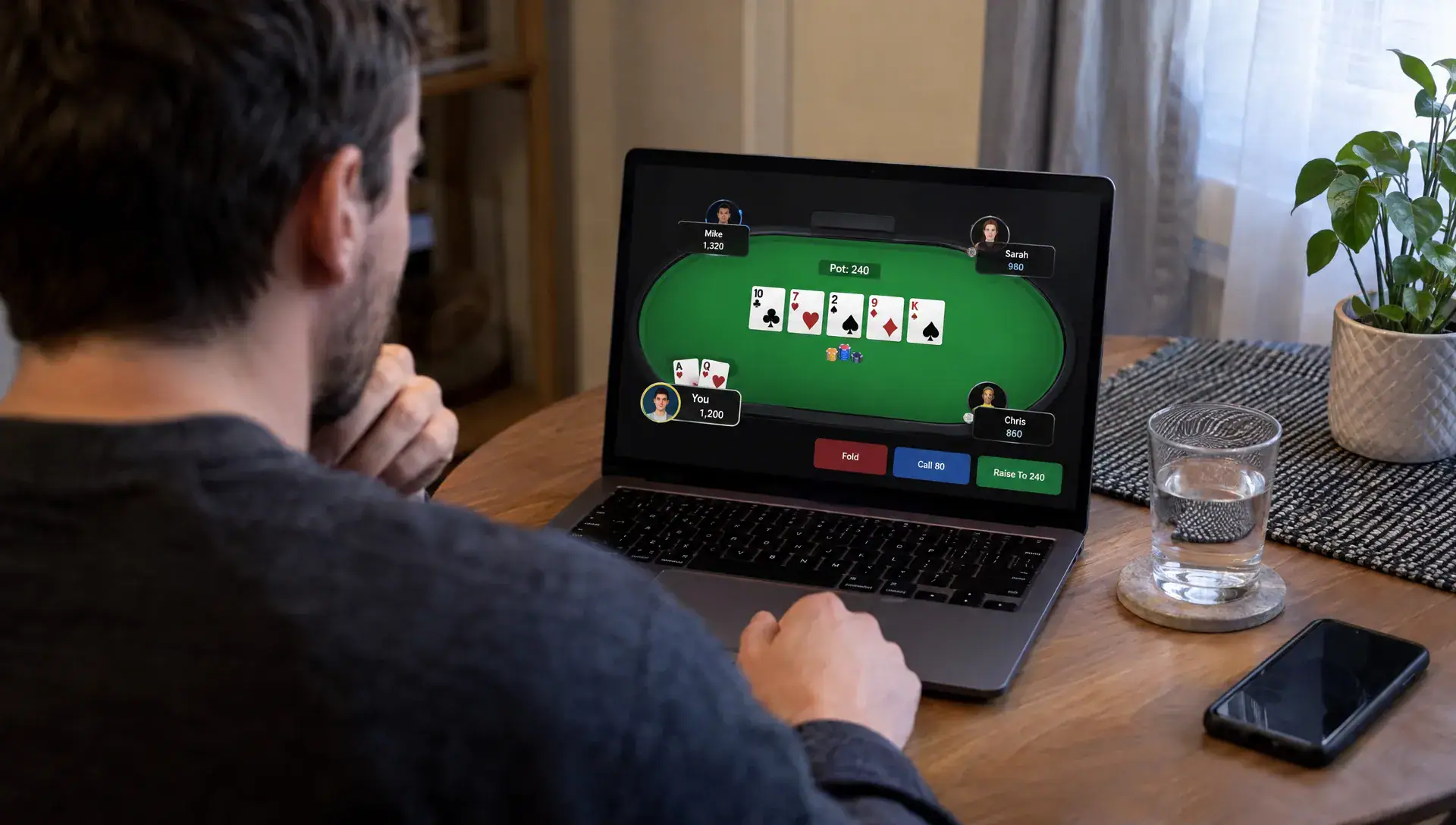
Choose one table to start. Find the fold, check, call and raise controls, then locate the chat settings, sit-out button and connection indicator. If the software offers a practice mode, use it to learn the controls before money is involved.
You should also understand the betting sequence. Rakeback Bible’s guide to the basic rules of poker explains blinds, community cards and betting rounds without assuming prior experience.
Set a spending limit before you play. Nobody at the table is entitled to keep you there, persuade you to deposit again or pressure you into higher stakes.
Keep the Action Moving Without Rushing
Pay attention when you are in a hand, but use the time the game gives you. A difficult river decision deserves more thought than folding an obvious weak hand before the flop.
Using your allotted thinking time is not rude. Intentionally running down the clock on routine decisions to annoy opponents is different. Tournament timing rules can be more specific, so follow the room’s policy rather than accusations in chat.
Many tables provide a time bank, an additional reserve of decision time. Learn whether it activates automatically or requires a click. It is there for genuine decisions, not something you need to avoid out of politeness.
A few interface habits also help:
- Keep the table visible instead of browsing while you wait for your turn.
- Check the amount you are facing before pressing call or raise.
- Use preselected actions cautiously because the available action or amount may change before your turn.
- Sit out if a phone call or other interruption needs your attention.
You do not owe anyone an explanation for every pause. If someone complains while you consider a legitimate decision, finish the hand normally and mute them if necessary.
Treat Chat as Optional, Not Part of the Competition
You can play an entire session without typing a word. A brief greeting is fine, but silence is equally acceptable.
Keep messages respectful and avoid criticizing how someone played. Telling an opponent that their call was terrible does not improve the game. It creates an unpleasant table and can pull your attention away from your own decisions.
Online poker chat also lacks tone of voice. Sarcasm after a large pot can read as an insult, even if you intended a joke. A simple “nice hand,” when sincere, is enough.
| Situation | A sensible response | What to avoid |
|---|---|---|
| Someone wins a pot against you | Say nothing or offer a brief “nice hand” | Insults or demands that they justify their play |
| You need help with a control | Ask a short interface question between hands | Discussing how to play a hand still in progress |
| Another player becomes abusive | Mute them and report serious misconduct | Arguing or sharing their personal information |
| You win a large pot | Let the next hand begin | Taunting the losing player or posting repeated celebrations |
Use the room’s designated chat language where required. Avoid posting promotional links, asking strangers for money or pressuring anyone to reveal personal details.
Do Not Discuss a Hand That Is Still Being Played
One of the most useful online poker etiquette rules is also easy to follow: do not reveal information or suggest actions while a hand is live, even after you have folded.
Suppose you fold an ace and the board later contains three aces. Typing “I folded the last ace” gives the remaining players information they should not have. Likewise, “Someone must have a flush” can influence a decision, even if it seems obvious to you.
Avoid announcing your folded cards, predicting an opponent’s holding or telling a friend to call. Wait until the hand has finished before asking a general strategy question, and accept that other players may not want to discuss it.
The same principle applies outside table chat. A private message or voice call can affect a hand just as much as a public comment.
Know Where Courtesy Ends and Fair-Play Rules Begin
Some behavior is merely irritating. Other behavior can breach the operator’s rules and lead to account restrictions or other sanctions. Do not treat the two as equivalent.
Playing independently is fundamental. Do not share hole cards with another person in the game, coordinate bets or agree to avoid competing against a friend. Deliberately transferring chips through arranged hands is not friendly table behavior; it can constitute chip dumping.
Outside assistance also needs care. Do not ask another person, an AI chatbot or a real-time solver what action to take during a live hand. Check the room’s current policy before using charts, tracking software or other tools. Permissions differ by operator and by whether the tool is being used during play.
For an example of how an operator defines these boundaries, consult PokerStars’ prohibited tools and services policy. Its rules are not a substitute for checking those of the room you actually use.
If you suspect collusion or automation, save the hand identifiers and contact support privately. Unusual play alone is not proof of cheating, and public accusations can unfairly target another player.
Handle Misclicks and Disconnections Calmly
Misclicks happen. If you accidentally raise instead of call, do not assume the action can be reversed. Many rooms treat confirmed actions as binding, subject to their published rules and any review of a genuine software issue.
If you believe something malfunctioned, note the hand number and contact support. Keep your description factual: what you intended, what the interface displayed and what action was recorded. Never post passwords, payment details or private account information in table chat.
A disconnected opponent deserves the same restraint. Let the software apply its timer and disconnection rules. You do not need to make a deliberate mistake to compensate, and you should not exploit a known software vulnerability.
If your own connection becomes unstable, sit out when possible. Repeatedly timing out while trying to fix your Wi-Fi is frustrating for you and the rest of the table.
Understand Slow Playing, Slow Rolling and Showing Cards
These terms sound similar but describe different things.
Slow playing is a strategy: playing a strong hand deceptively, such as checking instead of betting. It is not automatically an etiquette problem.
Slow rolling means deliberately delaying the reveal of an obvious winning hand at showdown to make an opponent believe they have won. Online software often controls the reveal, so a short delay does not establish intent. A connection problem or an unfamiliar interface can look similar.
Do not taunt an opponent while the result is being resolved. Let the client complete the showdown.
You also do not owe anyone a look at your cards simply because they ask. Follow the software’s showdown process and the room’s rules. Where optional showing or mucking is available, choosing not to reveal extra information is normal.
Leave a Cash Table Politely, Without Asking Permission
In a standard cash game, you can generally leave between hands, subject to any specific table restrictions. You do not owe the table another orbit because you just won a large pot.
Leaving immediately after a win is sometimes called a “hit and run.” Some players dislike it, particularly in private games, but that does not create an obligation to risk money you intended to stop playing with. Do not stay because someone challenges you to win it again.
Use the room’s sit-out or leave controls so you do not unintentionally enter another hand. In a private game, a brief heads-up about your planned finish time can be considerate.
Tournaments work differently. Leaving usually means your chips remain in play and blinds and antes continue under the event’s rules. If that is your chosen format, review the first online poker tournament registration checklist before committing to an event’s schedule.
A Simple Standard for Your First Session
You do not need to memorize every unwritten convention before playing. Start with a manageable standard: watch the action, make your own decisions, keep live-hand information private and treat opponents respectfully.
When you are unsure, distinguish an interface question from a strategy question. “Where is the sit-out button?” is usually harmless. “Should I call this bet?” asks for help making a live decision and should wait until afterward.
Good online poker etiquette does not require being especially social or experienced. It requires attention and restraint. If you make an innocent mistake, correct it where possible, learn the relevant rule and move on without turning it into an argument.
Frequently Asked Questions
Is it rude to leave an online poker table after winning? Generally, no. At a standard cash table, you can usually leave between hands, subject to the room’s specific restrictions. Private games may have agreed expectations, but another player’s complaint does not oblige you to keep gambling.
Do I have to say “nice hand” after losing? No. Chat is optional. Saying nothing is better than posting a sarcastic compliment or criticizing the winner’s decision.
Is using the time bank bad etiquette? No. Use it when you need to think. Deliberately wasting time to provoke other players is different, and tournament timing policies may impose additional requirements.
Can I play at the same table as a friend? Check the operator’s rules first. If permitted, you must still compete independently. Do not share cards, coordinate decisions or provide each other with live advice.
What should I do if another player insults me? Mute or block them using the available controls. Report threats, harassment or discriminatory abuse through the operator’s reporting process rather than arguing in chat.
Choose Your Next Table on More Than Rewards
Once you are comfortable with the controls and table conduct, Rakeback Bible can help you compare poker rooms, rakeback deals and bonuses. Weigh those offers alongside eligibility, game availability, fees and player-protection tools. A promotion is not a reason to exceed your budget or remain in a game you want to leave.
