
5 Best Online Cash Games for Different Poker Playing Styles
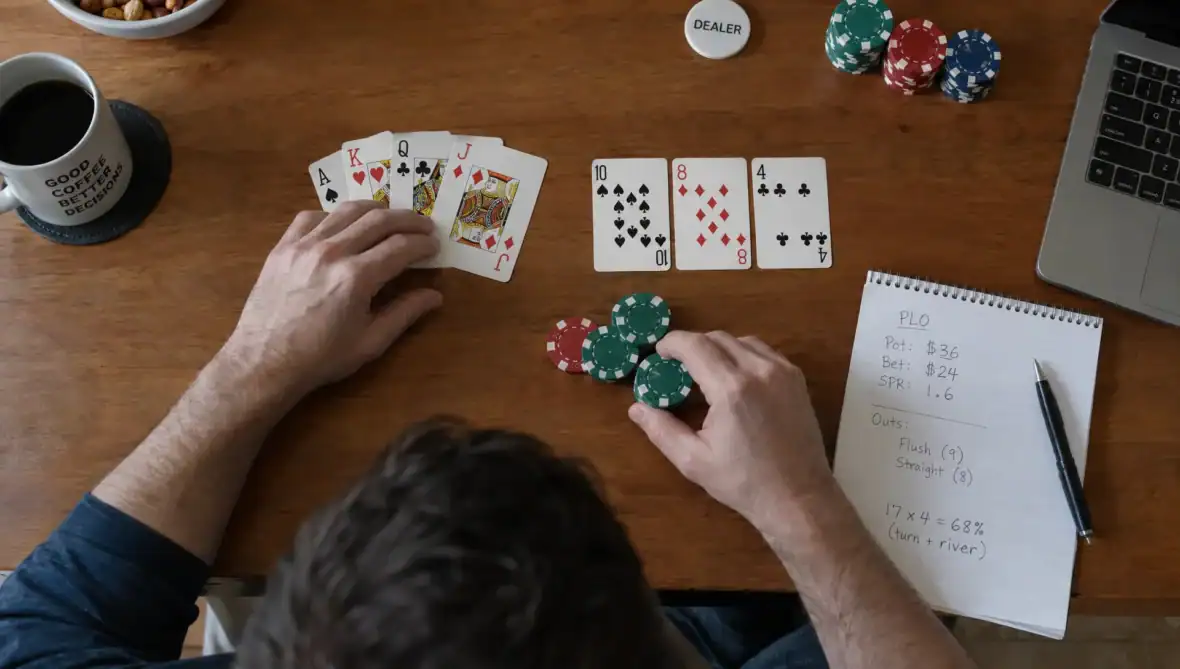
The best online cash games are not necessarily the fastest tables or the ones advertising the biggest rewards. For poker players, the right choice depends on decision-making style, bankroll, tolerance for swings and the opponents available during a normal session.
This guide compares five poker cash-game formats, not casino games or apps that promise money for completing tasks. The ranking reflects suitability for different players, not guaranteed profitability. Operator availability, rake and legal access must be checked separately for your location.
Quick verdict: match the format to your playing style
Six-max no-limit Texas Hold’em is the strongest starting point for players who want a balance of action, study material and strategic depth. The other formats suit more specific preferences.
| Rank | Cash-game format | Best fit | Main trade-off |
|---|---|---|---|
| 1 | Six-max no-limit Hold’em | Methodical players comfortable with controlled aggression | Frequent blind defense and marginal decisions |
| 2 | Full-ring no-limit Hold’em | Patient players who prefer fewer opponents involved in wide-range battles | Slower action and potentially limited table availability |
| 3 | Fast-fold no-limit Hold’em | Volume-focused players who make disciplined decisions quickly | Less continuity against individual opponents |
| 4 | Four-card pot-limit Omaha | Analytical players who enjoy complex draws and equity calculations | Larger swings and costly second-best hands |
| 5 | Heads-up no-limit Hold’em | Adaptable specialists who enjoy direct competition | Intense decisions and potentially unfavorable rake |
These are overlapping categories. Fast-fold tables, for example, often use a six-max structure. What distinguishes them here is the experience: a persistent table versus a pool that moves you to another hand after you fold.
What the best online cash games can realistically pay
Poker does not offer a dependable daily wage. Your results depend on your edge over the opposition, stakes, rake, rewards, payment costs and variance. A winning format for one player can be a losing choice for another.
Measure results after costs rather than treating cashback as income on its own. A useful calculation is:
Net result = table winnings after rake + realized rewards − payment and currency-conversion costs.
For illustration, suppose a player finishes $50 ahead after rake, receives $12 in withdrawable rewards and pays $2 in transaction costs. The net result is $60. Across 20 hours, that is $3 per hour for that sample, not an expected wage. If table results were instead negative $80, the same rewards and costs would leave a $70 loss.
Keep bonus balances separate from cash. A deposit match that has not cleared, leaderboard points and tickets are not equivalent to money available for withdrawal. Even a profitable sample can reflect favorable cards rather than a sustainable advantage, so avoid drawing conclusions from a handful of sessions.
1. Six-max no-limit Hold’em: best for methodical, assertive players
For players who enjoy structured study and selective aggression, six-max Hold’em belongs among the best online cash games to consider. With up to six seats, you encounter blind-versus-blind pots, late-position steals and relatively wide ranges more frequently than at a full table.
That creates room for preparation to pay off. You can study opening ranges, practice three-bet decisions and review common flop situations without learning a different set of hand-construction rules.
The format suits a tight-aggressive player, but not someone who waits exclusively for premium hands. Blinds arrive regularly, so excessive folding can become expensive. You need a plan for defending, value betting and recognizing when an opponent’s range is stronger than yours.
Start with one regular table and an effective stack depth you understand. Effective stack means the smaller relevant stack in a confrontation, which determines how much can actually be won or lost. A strategy developed for 100 big blinds should not be applied unchanged to a much shallower or deeper game.
Table quality still matters more than the six-max label. Rakeback Bible’s guide to choosing an easier poker table explains how lobby information can support selection. Treat any statistic as a clue, not proof that a table will be profitable.
2. Full-ring no-limit Hold’em: best for patient players
Full-ring Hold’em, commonly played with eight or nine seats, is one of the best online cash games for players who prefer a more selective preflop approach. With more opponents left to act, early-position ranges generally need to be stronger than in shorter-handed games.
This can suit someone moving from live poker who wants time to observe betting patterns and become comfortable with an online interface. At a single regular table, there is usually more space between personal decisions than in heads-up or fast-fold play.
Patience is useful, but passivity is not. Strong hands still need value bets, position still matters and calling repeatedly without a clear plan can produce steady losses. Playing fewer hands does not automatically mean taking less financial risk.
The practical limitation is availability. Some rooms or player pools may offer few full-ring tables at your preferred stakes. Check the lobby during the hours you actually expect to play, rather than assuming a format listed on a website has active games.
Also check what happens as seats empty. A nine-seat table with five active players is effectively a short-handed game. Your ranges and blind-defense decisions need to reflect the players currently dealt in, not the maximum table capacity.
3. Fast-fold no-limit Hold’em: best for disciplined volume players
Fast-fold poker moves you into another hand after you fold instead of making you wait for the current hand to finish. It can be among the best online cash games for players who value continuous decisions and dislike maintaining several regular tables.
The appeal is convenience and volume, not automatically better earnings. More hands create more opportunities to use an edge, but they also expose repeated mistakes more quickly. A player who consistently overcalls can lose faster simply because the next decision arrives sooner.
Fast-fold also changes the information available. You may encounter familiar screen names, but you lose some of the continuous observation available at a persistent table. Following an opponent’s recent behavior or table-specific adjustments becomes less straightforward.
This format rewards a reliable baseline strategy, careful bet sizing and the willingness to stop when concentration drops. It is less suitable for players who depend heavily on extended observation before making decisions.
Test one pool before adding volume. Review difficult hands afterward and compare both your results per 100 hands and your results per hour. A faster format can produce a lower win rate per hand yet a higher hourly result, or simply magnify an existing loss rate. Neither outcome should be assumed in advance.
4. Four-card pot-limit Omaha: best for analytical players
For players fascinated by draws, blockers and changing hand strength, four-card pot-limit Omaha can be one of the best online cash games to study. Its complexity comes from combinations and board interaction, not merely from receiving more hole cards.
In standard four-card PLO, you must use exactly two hole cards and exactly three community cards to make your hand. This rule is essential. Holding one ace of a suit does not give you a flush when four cards of that suit appear on the board.
PLO suits players who can distinguish a strong-looking hand from one capable of making the nuts. Connected cards, suited combinations and redraws matter because a made hand can face substantial drawing equity.
The main drawback is variance. Many playable matchups have closer equities than beginners expect, while non-nut flushes and weaker straights can become expensive second-best hands. Pot-limit betting does not make the format financially gentle.
Begin at stakes where losing several buy-ins will not affect essential spending or pressure you to recover losses. Moving across from Hold’em at the same monetary stake is not necessarily an equivalent risk decision. Learn the rules, study common equity situations and review hands before increasing stakes or adding tables.
5. Heads-up no-limit Hold’em: best for adaptable specialists
Heads-up poker removes the option of waiting while several opponents battle. You contest the blinds every hand, ranges widen and small adjustments can matter repeatedly against the same person.
It belongs among the best online cash games for experienced players who enjoy identifying tendencies and changing strategy quickly. A successful approach requires more than constant aggression: you must recognize when to value bet thinner, defend more often or reduce bluffs against an opponent who calls too much.
The learning environment can be unforgiving. A stronger opponent can exploit the same weakness across many hands, while frustration may encourage an unprofitable rematch. Rake can also consume a substantial portion of a small edge, particularly at low stakes.
Before sitting, check that genuine heads-up cash tables are available and inspect their rake schedule. Two players temporarily remaining at a larger table may face different conditions from a dedicated heads-up game.
Treat this as a specialist option rather than a default beginner format. Rakeback Bible’s discussion of adjusting your strategy for heads-up poker provides a starting point for understanding why predictable patterns become costly. Set a session stop time before play, especially when a match feels personal.

Compare the actual tables, not just the format names
Once you have a preferred format, compare operators using the same stakes, approximate stack depth and playing schedule. A room’s headline reward percentage tells you little without knowing which rake qualifies and whether you can realistically earn the advertised tier.
Check the percentage rake, cap, number-of-players rules and any additional deductions. Rewards may depend on volume, game eligibility, contribution method or promotion-specific conditions. Do not increase play merely to clear a reward whose cost exceeds its value.
The best online cash games for your style should remain attractive after those costs, not only before them. Rakeback Bible’s guide to comparing poker platforms by their true costs can help you evaluate the underlying terms rather than the largest advertised percentage.
Bankroll requirements also vary. There is no universal buy-in count that makes every game safe. Your skill uncertainty, game volatility, stack depth and ability to move down all matter. Keep poker funds separate from living expenses and choose stakes that let you stop without needing a recovery session.
Check legality, game integrity and account protections
A format recommendation is not an endorsement of every operator offering it. Access depends on where you are physically located, the operator’s authorization and applicable age requirements. Accepting a U.S. registration does not by itself demonstrate state licensing.
When evaluating the best online cash games, verify the operator before depositing. In New Jersey, for example, consult the Division of Gaming Enforcement’s internet gaming information. Players elsewhere should use their own jurisdiction’s regulator rather than assuming another state’s authorization applies.
Check these practical details:
- The legal entity operating the room and its applicable license.
- Age, identity and location-verification requirements.
- Published rules on bots, collusion, assistance software and prohibited tools.
- Account-security options and the process for reporting suspicious play.
- Withdrawal conditions, complaint procedures and responsible-gambling controls.
Recent independent withdrawal reports can help identify recurring problems, but screenshots and testimonials are not proof of solvency. Give more weight to consistent, detailed reports than referral-driven claims, and check whether complaints were resolved.
Use deposit limits before the first real-money session. If play starts affecting bills, sleep or relationships, stop rather than changing formats. The National Council on Problem Gambling provides information on finding support.
Test withdrawals before committing a larger bankroll
Even the best online cash games are a poor practical choice if you cannot understand how to withdraw your balance. Read the cashier terms before depositing, including minimum withdrawals, fees, currency conversion and any method-specific restrictions.
Complete required verification through the operator’s official channel. Where permitted, request a modest withdrawal before building a larger balance, while recognizing that one successful payment cannot guarantee future reliability. Keep records of the request, any fees and the amount received.
Separate operator processing time from payment-provider delivery time. A published estimate may begin only after approval, and verification issues can extend the process. Never send additional money to an unrelated person or wallet claiming it is necessary to unlock a withdrawal.
Usability deserves a separate assessment. Work such as Space Dinosaurs’ retail UX and performance optimization focuses on making digital experiences clearer, faster and more stable. Those are useful qualities to look for in a poker cashier too, but a polished interface is not evidence of licensing, protected funds or reliable payouts.
Frequently asked questions
Which cash-game format is best for a beginner? Low-stakes, regular-table no-limit Hold’em is a practical starting point because it offers established study resources and time to observe opponents. Six-max requires more frequent involvement, while full-ring can suit a more selective approach when active tables are available.
Can I reliably make $100 a day playing online poker? No format guarantees that result. Even a skilled winning player can experience losing days and extended downswings. Daily income targets can encourage chasing losses or moving to stakes that exceed a suitable bankroll.
Does higher rakeback make a game better? Not necessarily. Among the best online cash games for your situation, opponent quality, underlying rake and your own performance can outweigh a larger reward percentage. Compare net results rather than cashback alone.
Is fast-fold poker easier than regular-table poker? Not inherently. It is more convenient for continuous play, but reduced table continuity and rapid decisions create different challenges. The strength of the player pool matters more than the speed of the interface.
Can bonus money be withdrawn immediately? That depends on the promotion. Some rewards become cash when credited, while others require qualifying play or have restrictions. Read the specific terms before counting a bonus as withdrawable money.
Choose one format, then evaluate the room
Start with the format that matches how you make decisions, then check legal access, active tables, costs and withdrawal terms. Review a manageable sample at affordable stakes before adding volume. Use Rakeback Bible’s room reviews and deal comparisons to investigate the operator, but let suitability and net cost guide the choice rather than a headline reward.
Author