
How to Assess the Best US Poker Sites for Player Fund Safety

Searching for the best US poker sites should start with a question that bonuses and tournament schedules cannot answer: what happens to your money if something goes wrong? A polished app, quick first withdrawal or large player pool does not establish that customer balances are adequately protected.
Player fund safety depends on several separate safeguards: lawful operation where you play, clear custody arrangements, workable withdrawal terms and a credible route for complaints. This guide explains how to examine those safeguards, distinguish evidence from marketing and limit your exposure when important information remains unavailable.
Separate legal access from financial protection
A site accepting your registration does not establish that it is authorized to offer real-money poker where you are physically located. Start with the relevant state regulator, not a badge in the operator’s footer.
For example, the New Jersey Division of Gaming Enforcement and Michigan Gaming Control Board publish information about their regulated markets. Match the operator, poker brand and website against official information. A sportsbook authorization or an affiliated casino license is not automatically permission to offer online poker.
The best US poker sites for a particular player must first pass this location-specific check. Rakeback Bible’s guide to choosing poker sites by state explains that eligibility process in more detail.
Keep these distinctions clear:
- State-regulated poker: The operator is subject to the applicable state’s requirements and oversight. Check the specific rules governing player balances and complaints.
- Offshore poker accepting Americans: A foreign license does not establish authorization in your state or provide the same local enforcement options.
- Shared player pools: Interstate arrangements can connect eligible players across participating jurisdictions, but they do not authorize every brand or guarantee balances.
A license is a starting point, not a promise that losses, fraud or payment disputes cannot occur. Check current authorization immediately before registering, since laws, approvals and operating brands can change.
Find out what happens if the operator fails
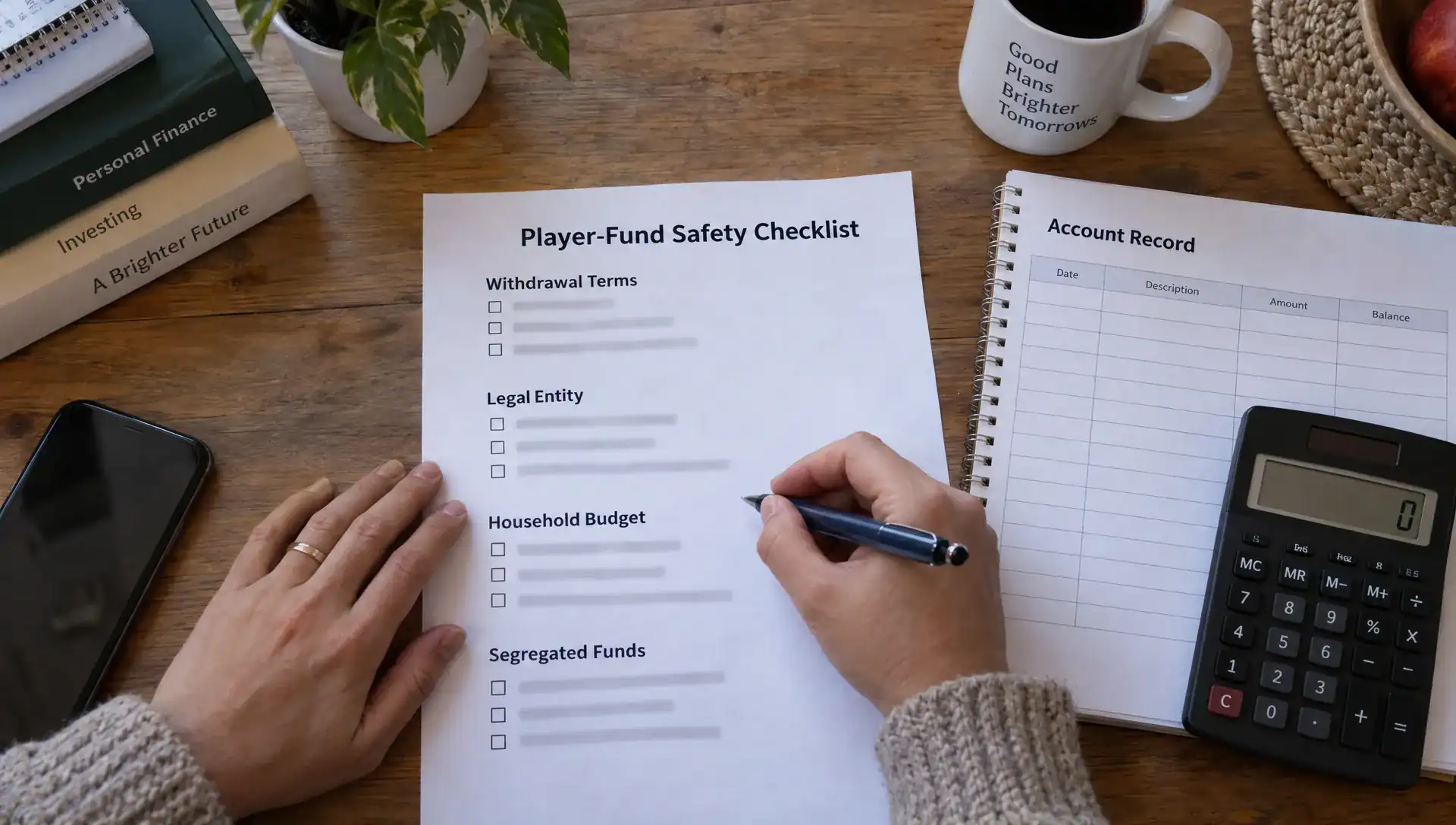
The balance displayed in a poker cashier is an account record. It does not, by itself, show where the corresponding money is held or whether you would recover it following insolvency.
Look for an explanation of how player liabilities are backed, whether customer funds are separated from operating money and what protection applies if the business fails. These are different questions. An operator might describe a separate account without explaining whether those funds would be outside the reach of other creditors.
When comparing the best US poker sites, prioritize documented arrangements over phrases such as “bank-grade security” or “your funds are always safe.” Encryption protects information in transit; it does not establish financial solvency.
Ask support for written answers to four questions:
- Which legal entity owes me the balance shown in my account?
- Are player funds held separately from ordinary business funds?
- What legal protection applies to those funds if that entity becomes insolvent?
- Which regulator or independent assurance process checks compliance, and where is its scope explained?
A support answer is useful evidence of what the operator represents, but it is not an audit. Compare it with the terms, regulatory requirements and any available financial disclosures. If an audit is cited, check its date, covered entity and scope. A game-fairness certificate does not prove sufficient money exists to pay every player.
Reconstruct the withdrawal rules before depositing
Fund protection matters little in practice if you cannot understand how to retrieve your available balance. Read the cashier terms, account terms and promotion rules together, looking for contradictions.
Separate the operator’s approval period from the payment provider’s delivery period. “Processed within 24 hours” might describe only an internal review, not the time until money reaches your bank. Check whether weekends, identity reviews or payment-method changes affect the estimate.
The best US poker sites should make the following costs and restrictions understandable before you commit substantial funds:
| Withdrawal issue | What to establish | Why it matters |
|---|---|---|
| Limits | Minimum withdrawal and daily, weekly or monthly maximums | A large balance may require several payments |
| Fees | Operator charges, payment-provider fees and currency conversion | The amount received may differ from the amount requested |
| Verification | Required documents and circumstances triggering further checks | Missing information can interrupt processing |
| Payment route | Whether withdrawals must return through the original method | Your preferred cashout method might be unavailable |
| Account closure | How withdrawable funds are handled after closure | Closing an account should not leave the payout process unclear |
Identity verification is normal in regulated financial and gambling processes. The concern is not the existence of checks, but unclear requirements, insecure document requests or unexplained repeated demands. Before uploading sensitive documents, review the steps for assessing a poker site before sharing your ID.
How to compare the best US poker sites using evidence
Build a short evidence record rather than relying on a single overall rating. Save the relevant terms, record the date and distinguish what you verified from what the operator merely claimed.
A useful review separates the following types of evidence:
| Evidence | What it can support | What it cannot establish alone |
|---|---|---|
| Official authorization record | The named operator’s authorization within its stated scope | Future solvency or guaranteed repayment |
| Player-fund rules and contractual terms | The obligations governing customer balances | Whether every obligation is currently being met |
| Independent assurance report | Findings within a defined scope and period | Protection beyond that scope or period |
| Completed withdrawal | That one payment succeeded under particular conditions | Reliable payment of every future balance |
| Player complaints | Potential patterns requiring investigation | Proof that every allegation is accurate |
When assessing the best US poker sites, give the most weight to evidence addressing the specific risk. An app-store score says little about insolvency protection. A successful small withdrawal says little about how a disputed five-figure balance would be handled.
Also examine the comparison website itself. Does it disclose commercial relationships, explain its testing and distinguish firsthand observations from operator statements? Affiliate compensation is not proof of an unreliable recommendation, but readers should understand the potential incentive.
A review that reports uncertainty is more useful than one that labels every listed room “completely safe.” Missing evidence should remain a visible limitation, not become a positive assumption.
Check which bonuses can restrict your money
A deposit bonus can introduce conditions that do not apply to an ordinary cash balance. Establish whether an offer releases gradually through play, has an expiry date or imposes restrictions on withdrawals.
Poker promotions may depend on contributed rake, qualifying tournament fees, game eligibility or other defined activity. A headline percentage does not reveal how much value your normal play will unlock.
When judging the best US poker sites, separate withdrawable cash, pending rewards and restricted promotional credit. Do not count all three as equally available money.
For example, an offer might release bonus increments as qualifying rake accumulates. That differs from receiving an immediately withdrawable cash payment. Read what happens to unearned rewards if you withdraw, stop playing or close the account. Also check whether accepting a promotion changes any conditions affecting your deposited money.
Rakeback deserves the same scrutiny. Establish how it is calculated, when it becomes payable and whether exclusions, caps or account restrictions apply. Compare the reward you can realistically earn, not just the largest advertised rate.
A financially sensible decision can be to decline a promotion. Playing extra hands solely to unlock a reward exposes more money to game losses and rake. Rewards should improve the economics of play you already intend to undertake, not justify depositing more than your budget allows.
Choose payment methods without mistaking them for insurance
A familiar payment logo does not mean the payment provider guarantees the poker operator. Similarly, an operator using a bank does not make the balance in your poker account equivalent to an insured bank deposit in your name.
The FDIC’s deposit insurance guidance explains the protection available for qualifying deposits at insured banks. Do not assume that protection extends to a poker account merely because an operator says it banks with an insured institution.
Payment methods also create different operational risks. Bank and wallet payments can involve processing delays, method-specific restrictions or conversion fees. Reversal and dispute rights depend on the transaction, provider rules and applicable law; they are not universal recovery mechanisms for gambling balances.
The payment options offered by the best US poker sites should therefore be assessed for usability, cost and traceability, separately from the operator’s financial safeguards.
Cryptocurrency adds further considerations. Confirm the asset, network, destination address and any minimum withdrawal amount. Network fees and exchange costs can reduce what you receive. Market price changes can alter the dollar value of a balance, while an incorrect transfer may be difficult or impossible to recover.
Neither cryptocurrency transparency nor fast transfers establish that an operator can meet all player liabilities. A visible wallet balance also does not reveal all liabilities or prove who controls the assets. Keep transaction records whichever payment method you use.
Use a small withdrawal test, not a large deposit
After checking lawful access, terms and identity requirements, a modest deposit-and-withdrawal test can reveal practical problems. Use only money you can afford to lose and comply with the operator’s legitimate account and payment requirements. Do not create extra accounts or attempt to bypass verification.
Record when you submitted the request, when it was approved, any documents requested and when the funds arrived. Note the amount received after fees. This creates a useful baseline for later comparison.
Testing helps distinguish the best US poker sites for your circumstances, but one successful payment is not a solvency test. Operators and payment routes can change, and a larger withdrawal may encounter different limits or reviews.
Keep your ongoing balance proportionate to your planned play. For illustration, someone budgeting $200 for recreational poker need not deposit $1,000 just because a promotion advertises a larger match. Those figures are an example, not a recommended bankroll.
Set a personal maximum for money held at any one operator and review it when your balance grows. Where practical, withdraw funds you do not need for upcoming play, accounting for fees and limits. This reduces exposure to an operator, although it does not eliminate game losses or guarantee recovery of money left behind.
Know who can resolve a dispute
Before depositing, identify the formal complaints process and any external escalation route. The relevant authority depends on the operator, your location and the issue. A regulator may investigate compliance without providing the same remedies as a court.
For a state-regulated room, verify the complaint instructions through the state regulator’s official website. For an offshore operator, investigate what the licensing body actually accepts, whether it handles payment disputes and how any decision can be enforced. A foreign license logo alone answers none of those questions.
Among the best US poker sites, clear accountability should matter more than promises of round-the-clock support. A friendly live-chat response is useful, but it is not a binding dispute-resolution procedure.
Preserve your account identifier, withdrawal reference, transaction records, relevant terms and correspondence. Submit a concise timeline and request a written explanation of the decision or delay. Avoid publishing identity documents or full financial details in public complaint threads.
Never send additional money merely because someone claims it will “unlock” a withdrawal or release recovered funds. Unexpected demands for payments to private wallets or individuals are serious warning signs. Independently verify requests using an established contact channel. If an account compromise is suspected, secure your email and payment accounts as well as the poker account.
Protect personal finances as well as the poker balance
Operator safeguards cannot make gambling risk-free. Keep rent, essential bills, emergency savings and borrowed money outside your poker budget. Deposit limits, time limits and self-exclusion tools can support boundaries, but their availability and scope vary by jurisdiction and operator.
If play is causing financial pressure or you are depositing to recover losses, stop and seek appropriate support. No ranking of the best US poker sites changes that priority. Someone helping another adult should discuss support needs rather than treating a poker account as a savings or money-management tool.
Where the underlying need is structured activity or social connection, consider non-gambling options. In the Netherlands, Ons Plekske’s supported daytime activities provide work, study, sport and recreation for young people with intellectual disabilities and/or autism. Readers elsewhere should look for suitable local services; such support is distinct from gambling treatment or financial dispute resolution.
Financial safety ultimately includes deciding not to open an account. If the operator cannot explain its obligations, the withdrawal terms are unacceptable or gambling does not fit your circumstances, a larger bonus is not a reason to proceed.
Frequently asked questions
Are state-regulated poker balances guaranteed? Do not assume so. Regulation can impose requirements and provide oversight, but the precise protection depends on applicable rules and fund arrangements. Check what happens during insolvency rather than treating a license as insurance.
Does keeping player money in a separate account make it insolvency-proof? Not necessarily. Separation describes how money is held. Whether it is protected from other creditors depends on the legal arrangement and applicable law. Look for an explicit explanation of insolvency treatment.
Can offshore sites be among the best US poker sites for fund safety? Accepting US players, holding a foreign license or paying withdrawals does not establish equivalent local protections. Assess lawful access, fund arrangements and practical enforcement separately. Do not infer safety from a ranking alone.
Does a delayed withdrawal mean a site is insolvent? No. Verification, payment-provider issues and compliance reviews can cause delays. Compare the delay with the published terms and ask for a written explanation. Repeated missed deadlines, contradictory answers or unexplained payment demands warrant greater caution.
How much should I leave in a poker account? No universal amount is safe. Keep exposure within an affordable gambling budget and avoid leaving money you do not need for planned play. A poker balance should not replace emergency savings.
Compare rewards only after the safety checks
Once you have established lawful access, acceptable fund safeguards and workable withdrawals, compare rakeback, fees and game availability. Rakeback Bible’s US-friendly poker site listings can help you investigate offers, but inclusion is not proof of state authorization or guaranteed repayment. Verify the operator’s current terms before depositing, and let unresolved fund-safety concerns outweigh any promotional reward.
Author