
How to Spot Good Poker Sites Before Sharing Your ID
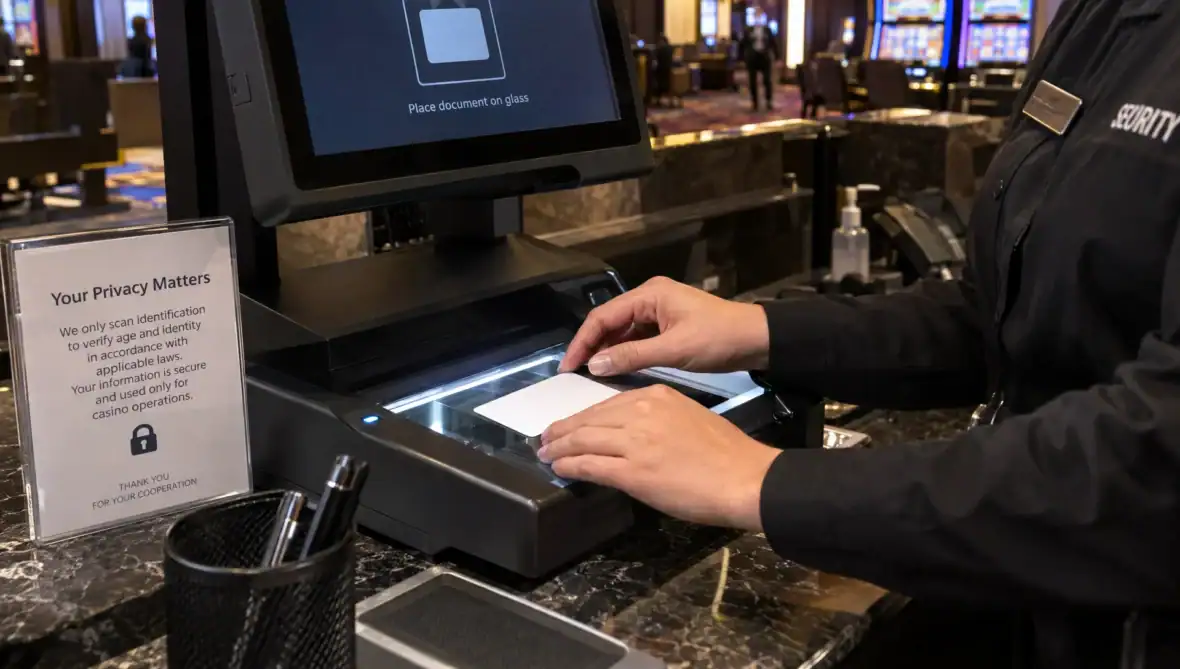
A poker room can have busy tables, polished software and an impressive bonus while still being the wrong place to send your passport. Identifying good poker sites starts with checking who operates them, whether they can legally serve your location and what happens to your identity documents after upload.
Identity verification itself is not a warning sign. Legitimate operators may need to establish your age, identity and payment ownership to meet regulatory obligations. The concern is an operator that wants sensitive information before clearly explaining its business, verification process or withdrawal rules.
Before uploading anything, build an evidence trail. The checks below help distinguish a normal know-your-customer process, usually called KYC, from an unnecessary privacy risk.
Start with legal eligibility, not the welcome bonus
A site accepting your registration does not prove that it is authorized to offer real-money poker where you are. Neither does a successful deposit, a familiar brand name or a reviewer describing it as “US friendly.”
For US players, the relevant questions include your physical location, the operator’s authorization in that jurisdiction and the specific product covered by that authorization.
How to verify good poker sites against official records
Start with your state gambling regulator’s official website, not the licensing badge in a poker room’s footer. For example, the New Jersey Division of Gaming Enforcement and Michigan Gaming Control Board publish information about authorized online gambling businesses.
Find the regulator independently, then look for approved operators, brands and website addresses. Where available, compare the license status and permitted activities with the poker room’s claims.
The company in the terms may differ from the consumer-facing brand because a platform operates through a licensed entity or partnership. That relationship should be traceable through official records. An unexplained mismatch deserves investigation, not an assumption that everything is fine.
A foreign license is not the same as authorization from your state. Likewise, a license covering another gambling product does not automatically establish permission to offer online poker.
Save the relevant official record and the date you checked it. If you cannot connect the exact website to an authorized operation, do not treat a logo or license number as sufficient evidence.
Separate your residence from your playing location
When assessing good poker sites, distinguish where you live from where you will physically play. A room may permit account registration by certain nonresidents but restrict real-money play to an authorized geographic area. Operator rules and local law determine the details.
Read the eligibility terms for your location, including minimum age, excluded jurisdictions and geolocation requirements. Online gambling ages vary, so do not assume one nationwide minimum.
Shared player pools also need careful interpretation. Players from participating jurisdictions may compete together under approved arrangements, but that does not mean anyone elsewhere in the country can join legally.
Do not use a VPN, borrowed address or someone else’s documents to get around restrictions. Those actions can violate terms, trigger security reviews and complicate access to funds.
If the rules remain unclear, ask support to identify the operator and the authorization covering your physical location. A regulator is the stronger source for confirming that answer. If the site’s position conflicts with official information, stop before submitting ID or depositing.
Understand what the ID request actually involves
KYC can involve a government-issued ID, proof of address, a selfie or evidence that you control a payment method. Requirements vary by operator, jurisdiction and risk assessment. The documents requested should have an understandable purpose.
Find the privacy policy and verification provider
The privacy policies of good poker sites should let you identify who is responsible for your information and how to contact them. Look for explanations of identity verification, fraud prevention, document storage and sharing with service providers.
An operator may use an external verification company. A redirect is not automatically suspicious, but the operator should be able to confirm the provider and the expected upload route. Do not rely on a logo displayed on an unfamiliar page.
Check whether the policy explains international transfers, retention periods or the criteria used to determine retention. Account closure does not necessarily mean immediate deletion: legal recordkeeping obligations may require an operator to retain certain information.
Privacy rights also depend on applicable law. A broad promise that you can request deletion is not a guarantee that every verification record will disappear on demand.
If the policy does not explain who receives your documents, ask before proceeding. You do not need to understand every technical detail, but you should know the recipient, the purpose and the authorized submission channel.
Confirm that the request came from the real operator
Open the poker room through a previously verified address or official application, then check your account notifications. Avoid beginning an ID upload from an unexpected email, text message or social-media conversation.
A practical way to investigate good poker sites is to compare the message with the verification instructions inside the account. If they differ, contact support through the independently confirmed website rather than replying to the message.
Inspect the full domain, not just the page title. Misspellings, extra words and misleading subdomains can disguise an impersonator. HTTPS protects the connection but does not prove that the business receiving your ID is legitimate.
If verification happens on a third-party domain, confirm that exact destination with the operator. Do not approve a redirect simply because the page looks professional.
Treat requests for remote computer access, cryptocurrency seed phrases, passwords or login codes as serious warning signs. A verification provider may legitimately use a live selfie or camera check, but that is different from asking you to surrender control of your device or wallet.
Minimize exposure without invalidating your documents
Use the designated secure upload process when available. Do not send documents to a personal email address or private messaging account merely because someone claims to work for the room.
Before uploading to good poker sites, ask whether any details may be masked and whether watermarks are accepted. Do not assume that redaction is allowed. Covering required information or altering an image can make verification fail and create further questions about authenticity.
Similarly, do not provide extra documents “just in case.” Submit what the confirmed process requires. If additional evidence is requested, ask what issue it resolves and which alternatives are acceptable.
Take photos privately, avoiding unrelated paperwork or other people’s information in the background. Keep any necessary local copies in protected storage rather than a shared photo album or unsecured folder.
Save the request, submission confirmation and case reference. You can preserve evidence of what you supplied without repeatedly forwarding the document itself. These records become useful if support later says an upload was never received.
Read withdrawal rules before making a deposit
A quick cashier transaction tells you little about the difficulty of withdrawing. Read the payment, verification and bonus terms together, because each can affect when funds become accessible.
Separate verification time from payment processing
When comparing good poker sites, break “withdrawal speed” into stages: account verification, internal approval, payment processing and arrival at your bank or wallet. An advertised processing time may describe only one stage.
Check when identity verification normally occurs and whether enhanced checks can follow. Completing an initial ID check does not guarantee that no further payment-ownership or source-of-funds evidence will ever be required.
Review withdrawal minimums, limits, fees and available methods. Some payment methods cannot receive payouts, even when they can fund deposits. Ask how the operator handles that situation and whether currency conversion adds a separate cost.
Be cautious about unconditional promises of instant withdrawals with no checks. Also distinguish a disclosed processing fee from an unexpected demand to send more money to “unlock” your balance.
A request to pay an unexplained tax, security deposit or verification charge to a personal wallet is a reason to stop and investigate. Do not play additional hands or make another deposit solely because an unverified representative says it will release existing funds.
Ask support a question that requires a specific answer
Before depositing, send one focused request: “What documents might I need for a withdrawal using my intended payment method, and where are those requirements published?”
For good poker sites, assess the substance of the response rather than friendliness or speed alone. A useful answer identifies the relevant policy, explains normal requirements and acknowledges circumstances that can lead to extra checks.
Use this evidence checklist to keep the conversation concrete:
| Check | Evidence to look for | Reason to pause |
|---|---|---|
| Operator identity | Named legal entity connected to official records | Unexplained company or domain mismatch |
| Document submission | Confirmed account portal or verification provider | Personal inbox or private messaging request |
| Payment ownership | Published requirements for the intended method | Requests unrelated to the stated verification issue |
| Withdrawal timing | Explanation of approval and payment stages | A headline speed with no scope or conditions |
| Complaints | Written escalation route and applicable external options | No identifiable complaints process |
Keep the transcript. One accurate exchange does not establish a spotless operating history, but contradictory answers expose uncertainty before your documents and money are involved.
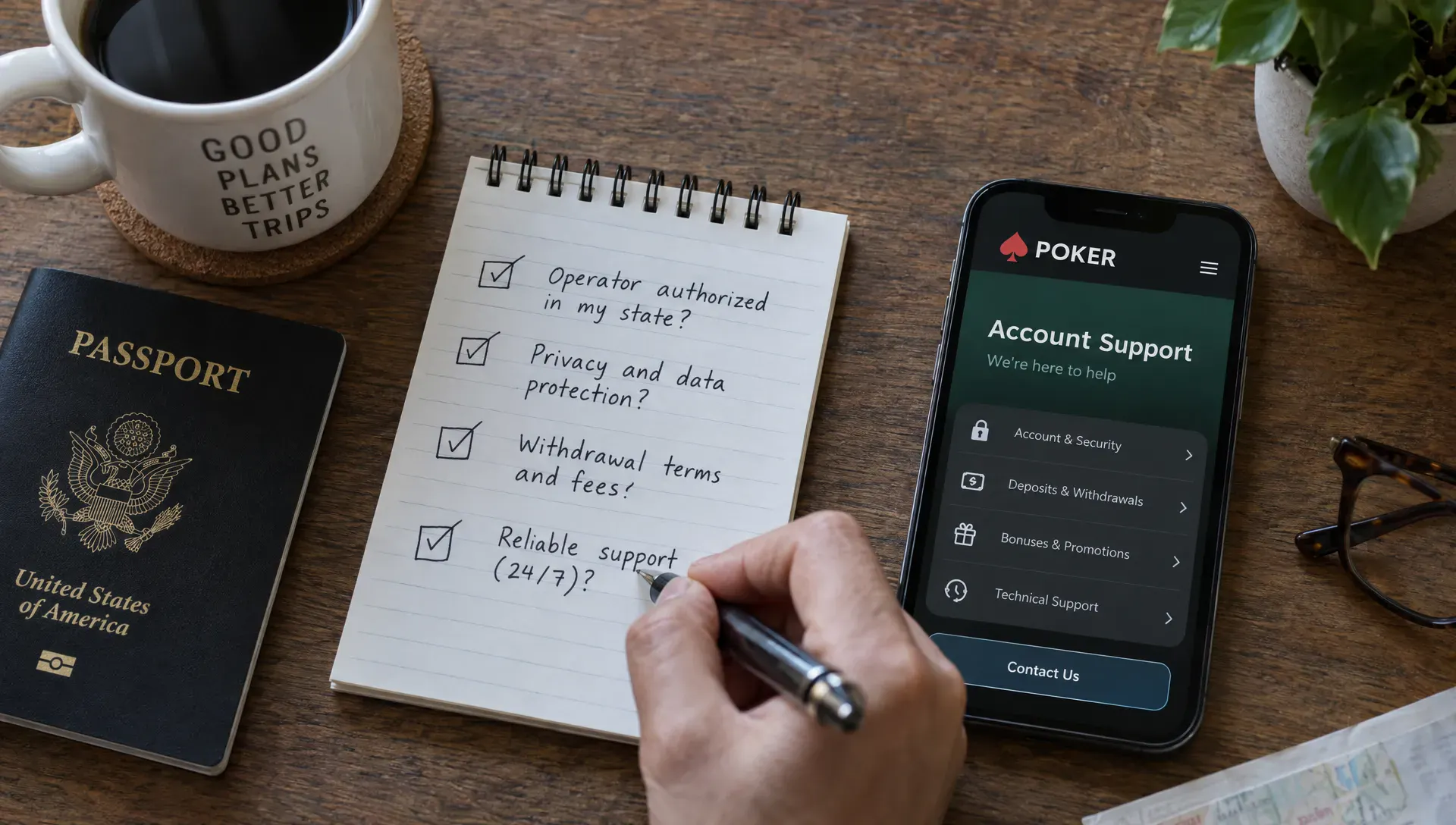
Trace the complaint route before you need it
Find the formal complaints procedure, including how to submit a complaint and what information it should contain. Check whether escalation is available through a regulator or a designated dispute-resolution body, and whether that route actually applies to your account.
Licensing does not necessarily mean a regulator will adjudicate every contractual disagreement or reimburse losses. Read the regulator’s complaint guidance rather than assuming its role.
Search player complaints for recurring, specific patterns: repeated document requests without explanations, unresolved withdrawal restrictions or inaccessible support. Give more weight to documented timelines and final outcomes than to anonymous praise or accusations.
A complaint count without context is weak evidence. Large operators have more customers, and public posts may omit relevant facts. Look for how issues were handled and whether the operator supplied a coherent explanation.
Preserve transaction references, policy screenshots and case numbers if a dispute develops. Never post an unredacted ID, bank statement or account recovery information publicly to prove your case.
Check poker quality without overvaluing marketing
After the legal and privacy checks, assess whether the room suits your actual games, schedule and budget. Security is essential, but it does not make every lobby a good fit.
Inspect the games and separate testing from claims
A busy tournament schedule is not proof of active cash games at your stakes. If the lobby is visible before verification, inspect it at the hours you expect to play. Distinguish occupied tables from empty listings and tournament guarantees from actual entries.
Reviews of good poker sites should say whether observations came from direct testing, operator materials or player reports. “We tested withdrawals” is more informative when the reviewer supplies a date, jurisdiction, payment method and the limits of that test.
A single successful payout cannot establish how every customer will be treated. Likewise, an advertised anti-bot system is not independent proof that games are free from prohibited assistance or collusion.
Check published rules on bots, real-time assistance, account sharing and prohibited software. Look for a reporting process, not promises that cheating is impossible.
Where available without unnecessary disclosure, play-money access can help you assess controls and stability. Rakeback Bible explains what free poker can teach you before you deposit, including the limits of treating practice games as evidence about real-money play.
Compare rewards only after the trust checks
Promotions should be the final comparison layer, not the reason to overlook missing legal or privacy information. A large bonus can have little value if its release conditions do not match your normal play.
When evaluating good poker sites, check qualifying games, contribution rates, expiration dates and restrictions on withdrawing promotional funds. For rakeback, identify which fees count, how rewards are calculated and whether advertised maximums depend on volume or additional conditions.
Compare realistic net costs rather than the largest percentage in an advertisement. Rakeback Bible’s guide to comparing online poker platforms by their true costs covers rake, tournament fees, payment charges and achievable rewards.
Review the comparison page itself, too. If it earns referral commissions, that relationship should be disclosed. Paid placement, independently tested observations and operator-supplied claims should not be presented as interchangeable evidence.
An affiliate relationship does not automatically make a review inaccurate, but it makes clear sourcing and methodology especially useful. Treat rankings as a starting point for verification, not as a replacement for official records and the terms attached to your account.
Make a go-or-no-go decision before uploading
Do not average away a serious warning sign. Excellent software cannot compensate for an unverifiable operator, and generous rewards cannot fix an unsafe document request.
Before choosing among good poker sites, confirm these essentials:
- Eligibility: You have checked authorization and account rules for your physical location and age.
- Identity: The brand, legal operator and website address form a verifiable chain.
- Privacy: You understand the purpose of the request, the recipient and the authorized upload route.
- Payments: You have read verification requirements, withdrawal restrictions and applicable fees.
- Accountability: You know how to complain and which external escalation options apply.
- Affordability: You have a fixed budget and understand the available responsible-play controls.
If a key point remains unresolved, delay the upload. A promotion deadline is not a good reason to rush a decision involving identity documents.
Set deposit and time limits before play where those tools are available. Keep essential expenses and emergency savings outside your poker bankroll, and never increase stakes to meet a reward threshold. Deposit only what you can afford to lose; an online poker balance is not a substitute for savings.
If gambling is becoming difficult to control, the National Council on Problem Gambling’s help resources can point you toward support and treatment options.
If you already sent your ID to a suspicious site
Stop sending further information while you establish what happened. Save the domain, messages, upload confirmations and payment records. Avoid confronting a suspected impersonator through links it supplied.
Verification habits used to assess good poker sites also help here: contact the genuine operator through an independently confirmed channel and ask whether the request and recipient were authorized. If payment information was exposed, notify the relevant bank, card issuer or payment provider promptly.
Change any reused passwords and secure affected accounts. Never give a supposed recovery specialist remote access or pay an upfront fee to retrieve funds.
If you suspect identity misuse, use IdentityTheft.gov for US recovery guidance. Depending on the documents and information involved, appropriate steps may include credit freezes, fraud alerts or contacting the issuing authority.
Distinguish an actual compromise from a lawful retention policy you dislike. You can ask about deletion or restriction rights, but an operator may have valid obligations to retain verification records.
Frequently asked questions
Is it normal for an online poker site to ask for ID? Yes. Identity and age checks are common at regulated operators, and payment or source-of-funds checks may also apply. Confirm the operator and submission route before sending documents.
Does a gambling license prove a site is safe for me? No. Verify that the authorization covers the operator, product and your location. Licensing provides an oversight framework, not a guarantee against every security incident or payment dispute.
Are poker sites advertising no KYC safer for privacy? Not necessarily. Among good poker sites, privacy depends on documented practices and accountability, not simply fewer signup questions. A room advertising no initial checks may still request documents later. Cryptocurrency payments do not remove legal, fraud or withdrawal risks.
Can I blur my passport number or watermark the image? Ask first. The operator or verification provider may require an unaltered image or specific visible fields. Use only explicitly accepted redaction or watermarking methods, otherwise you may invalidate the submission.
Should I deposit a small amount to test whether a site is legitimate? Not before resolving licensing and identity concerns. A small successful transaction cannot prove long-term reliability. If you later test withdrawals, follow published rules and remember that one result is limited evidence.
Compare the deal after verifying the operator
Use Rakeback Bible’s reviews and deal comparisons to narrow your options, then confirm current eligibility, privacy and payment terms directly. Keep your evidence, resolve unanswered questions and share your ID only through a verified process you understand.
Author