
How to Play Online Poker for Fun Without Spending Money
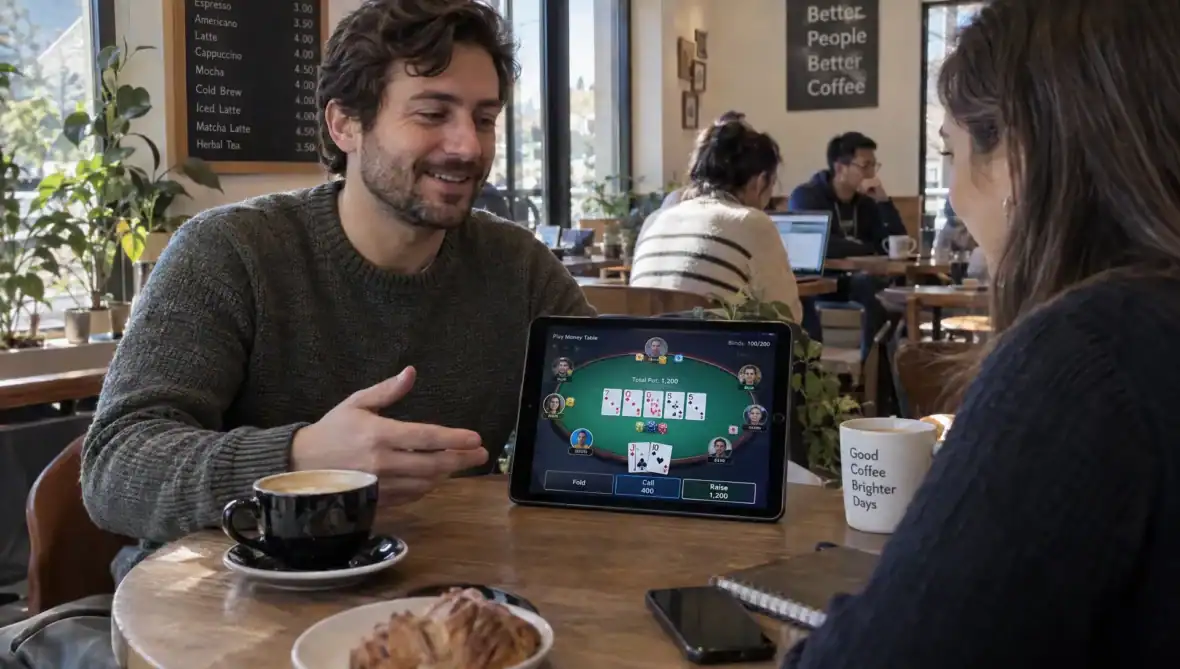
You can play online poker for fun without depositing money, buying chips or competing for cash prizes. The simplest options are free browser tables, social poker sites with play-money chips and practice games against computer opponents. The right choice depends on whether you want a quick solo session, a public table or a game with friends.
The key is choosing a format that stays free after you start. A “free download” can still include chip purchases, paid extras or links to real-money games. Here is how to find the experience you want without spending anything.
What counts as genuinely free poker?
For this guide, genuinely free poker means you can join and continue playing without paying. You use virtual chips that have no cash-out value, and losing them does not create a financial debt.
Free to download is not the same as free to keep playing. Before registering, check how the service replenishes chips. It might offer automatic refills, timed claims or a host-controlled reset. If your balance reaches zero, you should have a clear way to resume without purchasing anything.
Also distinguish recreational tables from freerolls and sweepstakes-style games. A freeroll may cost nothing to enter but award real-money prizes, bringing eligibility, verification and withdrawal conditions into the picture. That is a different experience from playing with chips that cannot be redeemed.
Which format suits online poker for fun?
Choose the type of game before choosing a site. That prevents you from downloading a full gambling client when all you wanted was a relaxed card game.
| Format | Best suited to | What to check before joining |
|---|---|---|
| Public play-money tables | Playing without organizing a group | Free chip refills, chat controls and available stakes |
| Private browser tables | Games with people you already know | Seat capacity, invitation controls and mobile usability |
| Computer-opponent practice | Learning buttons and hand rankings alone | Whether the game works without payment or registration |
| Play-money mode in a poker client | Players comfortable navigating a larger app | Clear separation from real-money tables and cashier screens |
For groups, check the table’s actual seat limit. Heads-up means two players, while six-max and nine-handed tables accommodate different group sizes. Do not assume every private-room service supports every configuration.
Examples worth checking
Poker Now offers browser-based private poker tables, making it a starting point for groups that want to share a room rather than install a traditional poker client. Check its current free features and room settings before organizing a session.
Replay Poker is a social play-money option for people who want to find other players. Optional chip purchases mean you still need to understand the free replenishment rules rather than treating every screen as cost-free.
Some established poker clients also offer play-money modes, although access can vary by product and location. For online poker for fun, a dedicated recreational table is usually easier to navigate than a lobby mixing free and paid games.
These are starting points, not guarantees of availability on your device or in your region. Check current access rules, minimum ages and any paid features directly with the provider.
Start playing without making a deposit
You do not need a bank card or cryptocurrency wallet to play ordinary, non-redeemable play-money poker. If a service asks you to fund an account before accessing its supposedly free tables, choose another option.
Use this short setup sequence:
- Choose the free mode: Look for labels such as “play money,” “practice” or “private table,” then confirm the chips cannot be cashed out.
- Check the refill rule: Find out what happens when you lose your starting stack, including whether there is a waiting period.
- Create only the account you need: Use a unique password if registration is required, and decline optional marketing permissions you do not want.
- Open one low-pressure table: Start with a single game so you can learn the fold, check, call and raise controls without rushing.
- Set a stopping point: Choose a session length and keep a firm rule against buying extra chips.
A short first session is useful for spotting awkward controls, intrusive purchase prompts or an unsuitable pace before you invite anyone else.
When playing online poker for fun, an empty virtual stack should mean a free reset, a break or the end of the session, not a trip to the cashier.
Learn enough Texas Hold’em to enjoy the first game
Texas Hold’em is a practical starting point because it is widely available. Each player receives two private cards, and up to five shared community cards appear in the middle. You make your best five-card hand using any combination of those seven cards.
Betting happens before the community cards, after the three-card flop, after the turn and after the river. On your turn, you may fold, check when no bet is facing you, call an existing bet or raise. The interface normally shows which actions are available.
You win by having the best hand at showdown or by making a bet that everyone else folds to. A hand-ranking reference beside you is enough to get started; advanced strategy can wait.
For online poker for fun, focus first on following the action and recognizing hands. Play-money opponents may take risks they would avoid with cash, so their behavior is not a reliable model for real-money games.
Check the mobile experience before committing
A browser game can work on both a computer and a phone without offering an identical experience. A table that looks comfortable on a laptop may have tiny bet controls, crowded player names or a chat panel that covers the cards on a smaller screen.
Test a few hands on the device you actually plan to use. Confirm that you can see your cards, identify whose turn it is and enter a bet without accidentally choosing the wrong amount. Try landscape orientation if the layout feels cramped.
“No download” also does not necessarily mean “no account.” A service can run entirely in a browser and still require registration. Conversely, some private-table tools may let guests join with less setup.
Voice and video deserve a separate check. Do not assume they are built in or included free. An existing group call may be enough, but test whether switching apps on your phone interrupts the poker table. Normal internet or mobile-data charges can still apply even when the game itself is free.
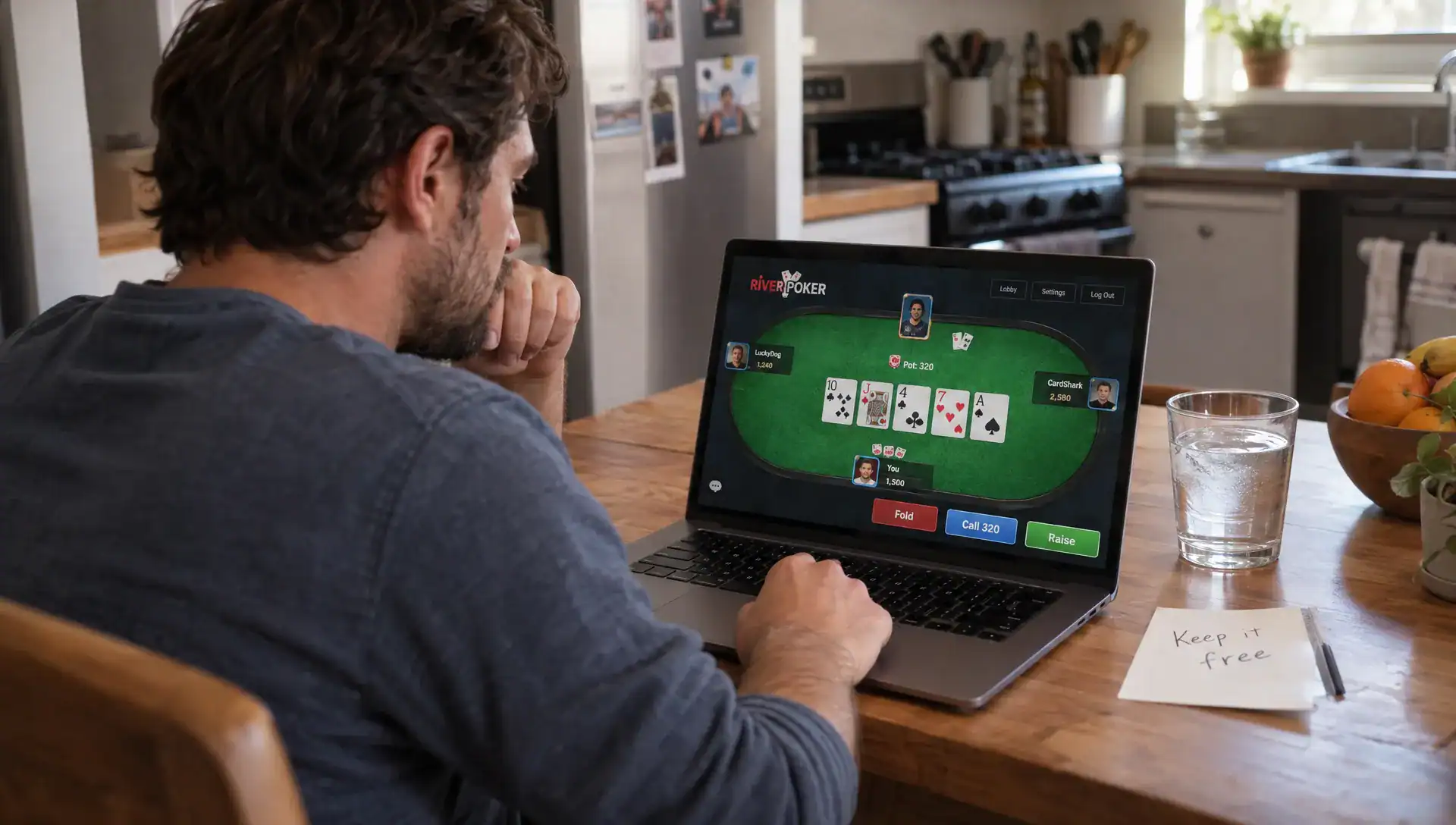
Keep private games private
Treat a private-room invitation like an access key. Share it directly with the people you want to invite rather than posting it in a public social feed. If the service offers a password, host approval or a way to lock seats, check those settings before play begins.
Use a nickname that does not reveal your full name, workplace or birth date. Review what your profile exposes, and avoid sharing account details or identity documents through table chat. If an ordinary recreational game unexpectedly requests sensitive information, pause and understand why before providing it.
For public tables, locate mute, block and report controls early. You should not have to tolerate harassment to finish a game.
Keeping online poker for fun also means keeping payments out of private arrangements. Do not attach side bets, cash settlements or paid entry to a session intended to be free. For more detailed hosting steps, our guide to setting up a private virtual poker game with friends covers the planning process.
Make the session enjoyable without buying extras
A friendly game does not need prizes or premium features. Agree on a comfortable pace, allow beginners time to act and decide whether players can freely reset their virtual stacks. If people join mainly to socialize, a relaxed table may suit them better than an elimination tournament.
Shared interests can supply conversation between hands. A sneaker-collecting group might debate favorite Air Jordans and Yeezys, while film fans might choose their next movie. Keep those themes conversational rather than turning them into purchases or prizes.
For a light challenge, track something that costs nothing: hands completed, unusual showdowns or a rotating host’s choice of variant. Avoid rewarding reckless all-in bets if some players are trying to learn the rules.
If learning becomes part of the appeal, our explanation of what free poker can teach you separates useful practice from habits that may not transfer to cash games.
Frequently asked questions
Can I play online poker for fun without an account? Some browser-based private tables and practice games allow guest access. Others require registration even though play is free. Check the current joining process before sharing an invitation or downloading an app.
What happens if I lose all my free chips? It depends on the service. You might receive an automatic refill, claim chips after a waiting period or ask the private-table host to reset your stack. Check this before joining, and skip any purchase offer.
Do free poker chips have real-money value? Ordinary play-money chips are not redeemable for cash. Do not confuse them with promotional currencies, prize entries or cash balances, which can have different terms and eligibility requirements.
Can I play with friends on different devices? Often, yes, but verify support for each person’s browser or app. Check seat capacity and test one hand on a phone before the full group joins. Voice-call compatibility may need its own test.
Is free poker suitable for every age or location? No universal rule applies to every service. Providers set age limits and geographic restrictions, and prize-based products can have additional legal requirements. Follow the platform’s rules even when you are not depositing money.
Choose a table that lets you stay at zero
Start with the simplest option that fits your plans: a practice game alone, a public play-money table or a private room with friends. Confirm the refill rules, test your device and leave payment details out of the process. There is no need to move to real-money play for the session to be worthwhile.
Author