
How to Choose a Poker Casino for Your First Live Session
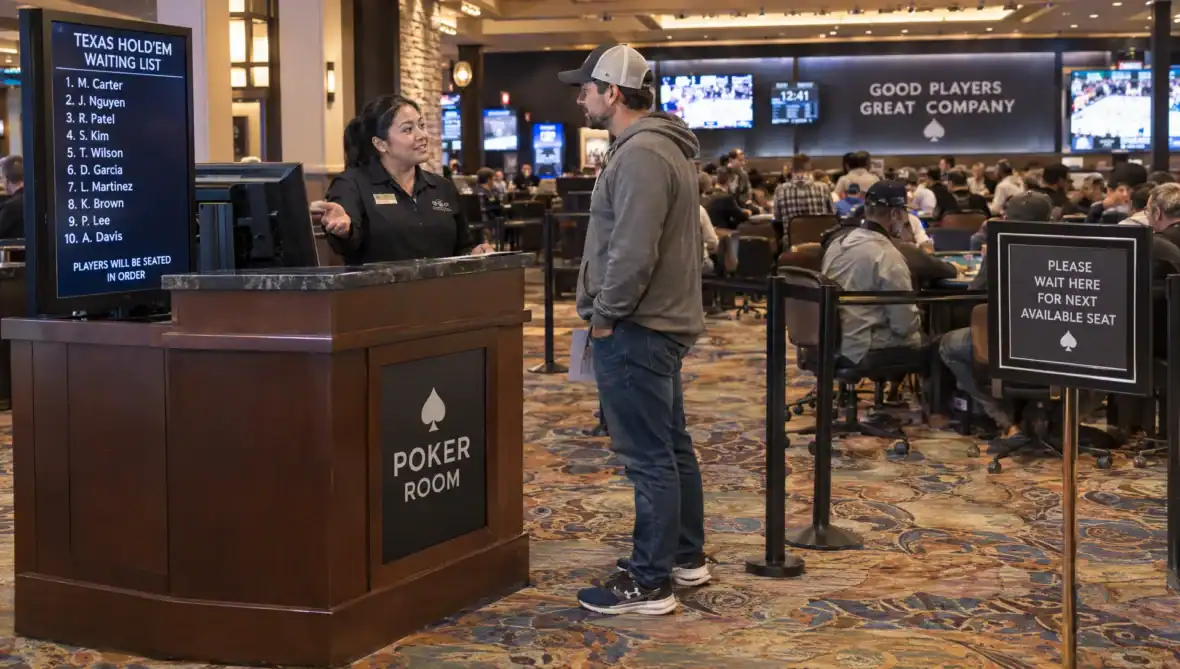
Your first live session starts with choosing a poker casino that fits your budget, offers a game you understand and makes it easy to ask questions. A famous name or a large tournament schedule matters less than manageable stakes, clear fees and a well-run room. Before traveling, confirm that the venue actually has player-versus-player poker, check its current game schedule and decide what you can afford to spend without needing to win anything back.
Start with the right kind of poker
Casino advertising can use “poker” to describe very different games. In a live poker room, you usually compete against other players while the venue collects rake or another charge. Games such as Three Card Poker and Ultimate Texas Hold’em generally pit you against the house. Video poker is a separate machine-based game.
If your goal is a conventional first session, look for a staffed room spreading a familiar game, such as Texas Hold’em. Confirm the betting structure too. No-limit, fixed-limit and pot-limit games have different rules and financial exposure.
Do not assume a low advertised blind means a small overall commitment. In no-limit poker, you can lose your entire table stack in one hand. Mandatory extra blinds or straddles can also make a game play larger than its headline stakes suggest.
Verify a poker casino before you travel
Check the venue’s legal authorization through the relevant regulator, not just a badge on its website. The appropriate authority depends on the jurisdiction and whether the property operates under a state or tribal framework. For a Nevada venue, for example, the Nevada Gaming Control Board is an official starting point. Do not extend that verification to properties elsewhere.
Confirm the minimum gambling age and acceptable identification directly with the property. A hotel reservation, restaurant booking or admission to another part of the building does not establish eligibility to play.
Then contact the poker room itself. A casino can remain open while its poker room has limited hours, fewer tables or a changed schedule. Ask what usually runs on your intended day and whether that game is running now if you are about to leave.
Read recommendations critically
Recent player reports can reveal practical details that official descriptions omit, including long waits, unclear announcements or inconsistent game availability. When evaluating a poker casino through community posts, look for a visit date, specific stakes and a description of what actually happened.
Treat recommendations as leads rather than verification. Tools such as Redditor AI are marketed for automated business outreach and engagement, so a conversational tone alone does not establish firsthand experience. That does not make a particular recommendation unreliable, but it makes checkable details more useful than enthusiasm.
Confirm anything that could change your trip, especially hours, buy-ins and fees, with the room directly.
Match the format to your spending limit
Cash games let you buy chips and generally leave between hands, subject to house procedures. Tournaments charge an entry amount and continue until you lose your chips, finish the event or choose to surrender your remaining participation. Neither format is automatically better for a beginner.
| Format | What you commit | What to check before entering |
|---|---|---|
| Cash game | A buy-in within the table’s permitted range | Blinds, minimum and maximum buy-in, extra blinds and charges |
| Freezeout tournament | One tournament entry, with no re-entry | Total entry price, fee breakdown, structure and expected duration |
| Re-entry tournament | An entry plus any additional entries you choose to purchase | Re-entry period, price of each entry and your firm spending cap |
Choose based on the experience you want. A cash session offers more control over departure time. A freezeout can make the entry cost easier to define, but it may require a longer commitment if you advance. A re-entry event becomes expensive if you keep buying back in.
Set a budget for the whole outing
A poker casino should fit your spending limit before rewards or potential winnings enter the calculation. Separate money for play from transportation, parking, meals and other expenses.
For example, suppose your maximum outing budget is $300 and you reserve $40 for non-poker expenses. That leaves $260 for play. If the permitted initial buy-in you choose is $200, only $60 remains available for an optional top-up. This is an illustration, not a recommended bankroll or a guarantee that the stakes are affordable.
Money you cannot comfortably lose should not be part of that budget. You can also stop before reaching the limit. For a broader look at travel costs and playing pace, Rakeback Bible’s comparison of live and online poker for low-stakes players helps put the full session expense in perspective.
Find out what the room charges
The blinds are only part of the cost. A room may take a percentage of eligible pots up to a cap, collect a timed seat charge or use another disclosed arrangement. Some games also have a separate promotional drop that funds jackpots or other offers.
Before choosing a poker casino, ask staff to explain the charges using a typical hand at your intended stakes. Useful details include the rake percentage, cap, any additional drop and whether the collection changes when fewer players are seated.
Ask whether rake is taken when a hand ends before the flop. Do not assume every room follows the same policy. For tournaments, check how much of the advertised entry goes toward the prize pool and how much is retained as fees or other disclosed charges.
You do not need an exact hourly cost prediction. You do need to understand what is being collected and when.
Keep rewards in perspective
A player card may track eligible play toward benefits, but availability and earning rules vary. Ask whether registration must happen before you sit down, how play is recorded and whether any advertised benefit applies to your specific game.
Live room comps are not automatically equivalent to online rakeback. Food credit, promotional drawings and cash rewards have different values and restrictions. Do not subtract a headline reward from your budget unless you know you qualify and can actually use it.
For a first visit, a comfortable game with clear charges is more useful than a promotion that requires extra hours or higher spending.

Prioritize clear rules and a comfortable atmosphere
A beginner-friendly room does not need to be quiet or luxurious. It should have an understandable seating process, attentive dealers and an accessible floorperson who handles rules questions and disputes.
Observe a table before joining. Can players hear the dealer? Are bets announced clearly? Do staff address abusive behavior? Can you comfortably see the board and follow the action from the available seat? These details matter more than elaborate décor.
The right poker casino for your first visit should let you concentrate on the game rather than struggle with avoidable confusion. Ask about accessibility needs, smoking policies and any restrictions that affect your comfort before committing to the trip.
Staff can explain procedures, although they should not advise you how to play a hand. A straightforward answer to a basic question is useful evidence of a welcoming environment. Repeatedly dismissive responses are a reasonable reason to choose another room.
Call ahead with a short checklist
One brief conversation can prevent an expensive wasted journey. Explain that you are planning your first live visit and name the game and stakes you want.
Before heading to a poker casino, get clear answers to these questions:
- Game availability: What is running now, and what usually runs at my intended arrival time?
- Entry requirements: What are the age, identification and any membership requirements?
- Buy-in and payment: What are the table limits, and where and how do I purchase chips?
- Charges: What rake, timed collection, promotional drop or tournament fees apply?
- Seating: Is there a waiting list, can I join remotely and when must I check in?
- Practical access: What should I know about parking, entrances, accessibility and room hours?
A waiting-list entry may not guarantee an immediate seat. Ask what happens if your name is called before you arrive and whether the list is specific to a particular game.
Plan your arrival and first few hands
Arrive with enough time to find the room without rushing. Go to the podium or desk rather than taking an apparently empty seat. Staff may be holding it for another player or balancing tables.
Tell the dealer that this is your first live session. Ask how to buy in, where to place your chips and when you may enter the action. If you are unsure what a bet means, ask for clarification before acting.
At a poker casino, clear actions help prevent avoidable mistakes. Act only when it is your turn, keep your cards visible and protected, and avoid commenting on a hand while others are still playing. Do not assume that casually tossing in one large chip communicates the raise you intended. State your action clearly and follow the dealer’s instructions.
If a rules dispute arises, pause and ask for the floorperson rather than arguing with another player. House rules and the circumstances of the action determine the ruling.
Set a departure time as well as a spending limit. Leave if you feel tired, pressured or tempted to recover losses. When finished, ask where to cash out and count your chips and payment carefully.
Frequently asked questions
How much money should I bring for my first live session? Check the specific game’s minimum buy-in, then choose an amount you can afford to lose. Keep travel and meal money separate. If the minimum entry exceeds your entertainment budget, choose another game or postpone the visit rather than stretching your limit.
Is a cash game or tournament better for a beginner? A cash game generally offers more flexibility over when you leave. A freezeout tournament gives you one defined entry cost but may last several hours. Compare the actual structure and fees rather than assuming either format is easier or cheaper.
Can I visit a poker casino without playing immediately? Ask the venue about access and observation rules. If permitted, watching briefly can help you understand the seating process and pace. Stay clear of active tables, do not look at private cards and avoid discussing hands in progress.
Do I need to tip the dealer? Tipping practices vary by location and room. Where customary, tips add to your session expense, so allow for them in your planning. Ask about local practice if unsure, and never feel that a tip should influence a rules decision.
What if I feel uncomfortable after sitting down? You do not have to continue playing. Between hands, ask the dealer or floorperson how to leave or request a different table. If gambling stops feeling manageable, stop playing and seek support through a resource such as the National Council on Problem Gambling.
Choose clarity over promotions
Shortlist rooms that offer your preferred game, explain their costs and fit your budget. Then choose the poker casino where the practical details are clearest, not the one promising the biggest reward.
If handling cards, following positions or reading the board still feels unfamiliar, use free poker practice to learn the mechanics before visiting. Practice cannot reproduce real-money pressure, but it can reduce procedural distractions. Your first live session does not need to be profitable to be well planned; it needs to stay within the limits you set.
Author