
How Online Poker Sites Verify Real Money Accounts

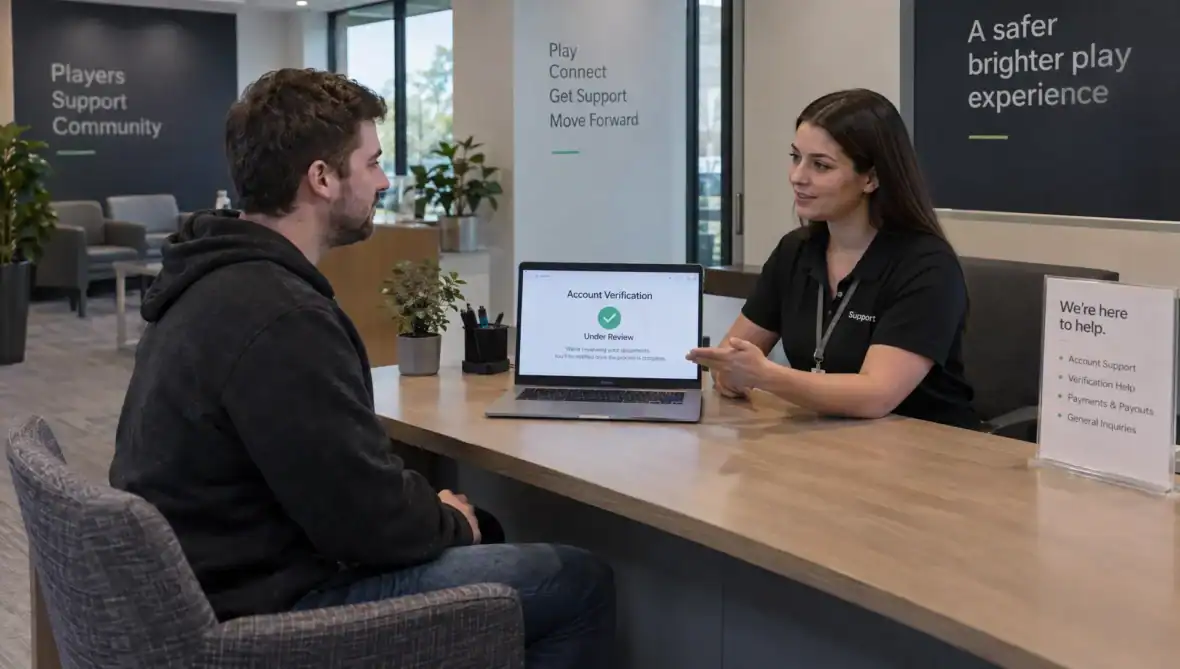
Searching for “online poker sites real money” often brings up bonuses and room rankings, but account verification determines whether you can actually play and withdraw. A poker operator may check your identity, age, address, physical location and ownership of your payment method. Some checks happen automatically during registration; others require documents or a manual review.
Verification is not one permanent approval. Passing an identity check does not necessarily clear a withdrawal, satisfy a later source-of-funds request or confirm your location for every playing session. This guide explains what each check establishes, how to prepare your documents and what to do when a review stalls.
What “online poker sites real money” searches should establish first
Before uploading identification, establish which legal framework governs the account. Verification procedures can look similar across very different types of poker businesses, but the protections behind them are not interchangeable.
| Operating model | What to establish before registering |
|---|---|
| State-regulated real-money poker | Whether the operator and poker product are authorized where you intend to play |
| Sweepstakes-style poker | How promotional currencies, purchases, eligibility and prize redemption work under the specific rules |
| Offshore poker | Which jurisdiction licenses the operator, whether access is lawful locally and what complaint mechanisms actually exist |
An offshore license does not establish authorization in a US state. Likewise, a sweepstakes account that requests identification is not thereby equivalent to a state-regulated gambling account.
For state-regulated real-money online poker sites, start with the regulator rather than an operator’s license badge. For example, visit the New Jersey Division of Gaming Enforcement and navigate to its current internet gaming information. Match the operating company, approved brand and domain where those details are published. Confirm that poker is available, not merely casino games.
Authorization can change. Use Rakeback Bible’s guide to choosing poker sites by state to structure your research, then confirm current details with the relevant regulator.
The checks an account may pass through
Know your customer, usually shortened to KYC, describes procedures used to establish who a customer is. Poker account controls extend beyond KYC to location, payment security, excluded-person screening and game integrity.
The following checkpoints are common possibilities, not a universal sequence or a promise about any particular room:
| Checkpoint | What the operator is establishing | Possible evidence |
|---|---|---|
| Registration | Identity, age and basic eligibility | Name, birth date, address and database matches |
| Document review | Whether submitted details belong to you | Government ID and proof of address |
| Location check | Whether wagering is permitted from your current location | Device location and network signals |
| Payment review | Whether you control an eligible funding method | Bank, card or wallet ownership information |
| Enhanced review | Whether activity requires further explanation | Source-of-funds records or additional identification |
Real-money online poker sites may complete several checks together. A database match can remove the need for an initial document upload without preventing later requests.
Read status messages literally. “Email verified,” “identity verified” and “withdrawal approved” describe different outcomes. An open cashier or successful deposit is not evidence that every compliance requirement has been satisfied.
What happens during registration
Enter your legal name, date of birth and residential address accurately. Use the name that appears on your identity documents, not a nickname or your poker screen name. If you have recently moved or changed your name, expect that older records may not match.
For US accounts, an operator may request Social Security information for identity matching. The amount requested varies, so confirm the reason and submission channel before providing it. A failed automated match does not necessarily mean someone suspects fraud; incomplete records and ordinary data-entry errors can also cause failures.
Age rules come from the applicable jurisdiction and product. Do not assume that reaching your state’s general age of adulthood establishes gambling eligibility.
Regulated real-money online poker sites must apply the eligibility requirements governing their service. These can include checks against relevant self-exclusion or prohibited-person records. A previous account can also trigger a duplicate-account review under the room’s rules.
If you discover an old account, ask support about recovery rather than opening another. Do not create replacement accounts to work around a restriction. While setting up an eligible account, review deposit limits, time reminders and self-exclusion options. Set practical limits before funding it, rather than waiting until you are already playing.
Which documents may be requested
A government-issued photo ID commonly supports checks of your name, birth date, photograph and document validity. Depending on the operator and jurisdiction, acceptable documents may include a passport, driver’s license or national identity card.
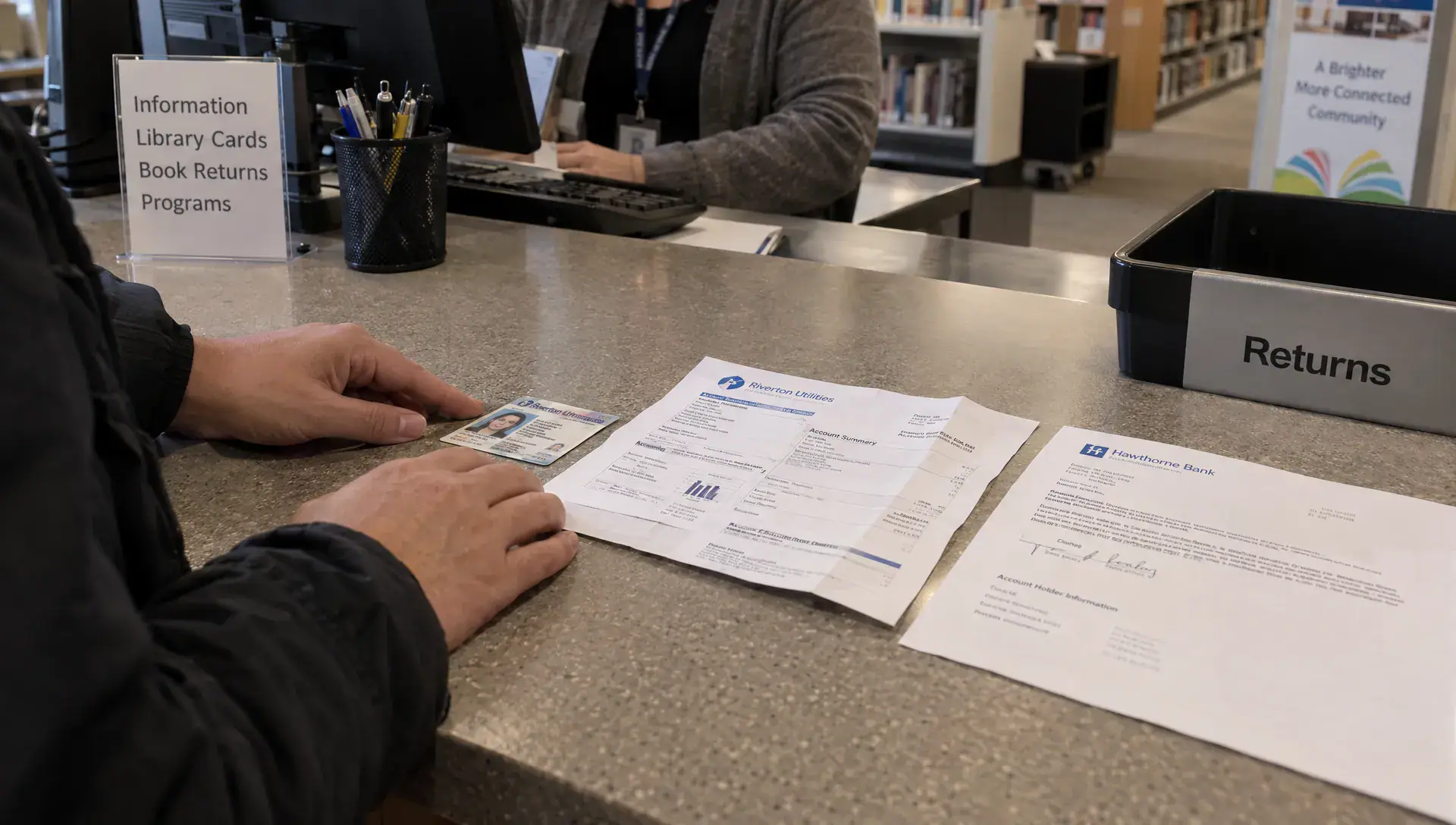
Proof of address serves a different purpose. A utility bill, bank statement or government correspondence may establish where you live, but the accepted document types and recency window vary. Follow the room’s published requirements rather than assuming a document accepted elsewhere will work.
Submit a clear, complete image through the designated channel. Keep required edges, dates and identifying details visible. Avoid glare, blur, screenshots or cropped pages when the instructions prohibit them. Do not edit documents to make conflicting information appear consistent.
If a document contains unrelated sensitive information, ask which fields may be redacted before changing it. Over-redaction can prevent verification, while unnecessary disclosure creates avoidable privacy exposure.
For real-money online poker sites, a legitimate life change can require connecting evidence. A marriage certificate or legal name-change record might explain why a bank account and passport differ. Ask what is accepted rather than sending a large collection of personal records.
Digital-only banking can introduce another mismatch: a transaction screenshot may omit your address or account-holder name. Ask whether a downloadable statement or bank-issued ownership letter meets the stated requirement. Do not assume that showing an available balance proves ownership.
Why location verification is separate from identity
Your identity establishes who you are. Geolocation establishes where your device appears to be when you access a restricted service. A residential address in an eligible state does not necessarily authorize wagering while you are elsewhere.
Depending on the platform, location checks may use device permissions, Wi-Fi information, network data or dedicated verification software. Checks can recur during a session rather than happening only at registration.
Real-money online poker sites operating under state rules may restrict wagering even when an account remains accessible for other functions. An interstate player pool does not eliminate the location rules applying to each participating market.
If verification fails, first review the operator’s troubleshooting instructions. Confirm that required permissions are enabled and that the official application or location component is current. Remote-desktop software, privacy tools or inconsistent network information may require attention through approved troubleshooting steps.
Do not use a VPN, location-spoofing service or another person’s device to misrepresent where you are. If you are physically near a border, ask support what legitimate troubleshooting is available. Never treat a technical workaround as permission to play from an ineligible location.
Payment ownership is another verification layer
An approved identity does not automatically approve every deposit method. Operators may need to confirm that the bank account, card or payment wallet belongs to the registered player and is permitted under their cashier rules.
A partner’s card or shared payment arrangement can create problems even when the transaction was consensual. Check joint-account policies before depositing. If a payment service displays a different name, resolve the discrepancy through official support rather than experimenting with additional methods.
For real-money online poker sites, low-friction payment processing does not remove gambling-account obligations. In another context, TixFlow’s ticket checkout without buyer registration illustrates how buying event admission can require less onboarding. That convenience should not create an expectation that regulated poker can dispense with identity and eligibility checks.
Cryptocurrency funding is not a general exemption either. A poker operator may still request identification or evidence connecting you to a transaction. Follow its documented ownership-verification process, but never disclose a wallet seed phrase or private key.
A successful payment proves that a transaction was processed. It does not, by itself, establish that the account has passed every review needed for play or withdrawal.
When a selfie or enhanced review is requested
Some operators or their verification providers use a selfie, facial comparison or liveness check to assess whether the person submitting an ID is present. This is different from an ordinary profile photograph.
Before starting, check the provider’s instructions and privacy notice. Use suitable lighting and follow the requested capture process. If a disability, device limitation or identification issue prevents completion, ask whether an alternative review is available. Do not assume an alternative is guaranteed.
Real-money online poker sites may also request information about the origin of deposited money where applicable compliance rules or account circumstances require it. Proof of funds generally concerns available money; source-of-funds evidence concerns how particular money was obtained. Source of wealth is broader still.
Ask which question the operator is trying to answer. A payslip, bank statement or sale document serves a different purpose, and submitting unrelated records can slow the review while exposing more information than necessary.
A practical submission workflow
Before uploading anything, read the complete request and check whether a deadline affects your account. Keep a private record of what was requested and when, but avoid creating unnecessary copies of sensitive documents.
- Confirm the request: Open the official app or type the known domain yourself, then check the account’s verification area.
- Match the requirement: Identify the exact document type, date range, image format and required visible information.
- Check consistency: Compare your name and address across the account, identification and relevant payment records.
- Submit once through the approved channel: Avoid opening several support cases or uploading different versions without explanation.
- Save the reference: Record the submission date, case number and stated review window without storing document images in an insecure notes app.
If instructions conflict, ask support to clarify them in writing. For example, a generic upload page might request a statement while the case handler needs evidence of a specific transaction. Resolving that difference first is more useful than repeatedly submitting the same file.
With real-money online poker sites, an accurate submission is generally more useful than a large one. Supply what is requested, not every financial document you possess.
Why verification fails or remains pending
An automated rejection and a manual review are not the same outcome. The first may identify a correctable submission problem; the second may mean a person must assess information that software could not resolve.
| Problem | Appropriate next step |
|---|---|
| Blurry image or missing document edge | Retake the image according to the capture instructions |
| Expired or unsupported identification | Ask which current alternatives are accepted |
| Address differs across records | Explain the move and request the approved evidence requirements |
| Payment-holder name does not match | Stop using the method and ask support to review ownership |
| Duplicate-account alert | Request account recovery or clarification, not another registration |
| Review pending without detail | Ask what remains outstanding and obtain a case reference |
Do not assume that every rejection can be fixed by resubmitting. If the issue concerns eligibility, exclusion or a prohibited payment method, a clearer photograph will not resolve it.
Real-money online poker sites may limit how much they disclose about fraud-detection processes. They should still be approached through their published support and complaint procedures when you need an actionable explanation.
Avoid sending altered evidence or inventing a reason for a transaction. If you cannot provide a requested record, explain why and ask whether an alternative is acceptable. Keep your explanation factual and consistent across support conversations.
Protect your documents during the process
A professional-looking upload form is not sufficient evidence that a request is genuine. For a fuller pre-submission review, use this guide to checking poker sites before sharing your ID.
Review who operates the account, whether an external verification provider is involved and what the privacy notice says about collection, sharing and retention. Biometric information may have separate disclosures. Ask questions if the purpose of a request is unclear.
Enable multifactor authentication where available and protect the email account attached to your poker login. Avoid public computers and shared photo libraries when handling documents.
Legitimate requests from real-money online poker sites should be assessed through independently accessed official channels. A social-media message, unsolicited attachment or urgent demand to move a conversation elsewhere deserves additional scrutiny.
Never provide your password, one-time authentication code or wallet recovery phrase to a supposed verification agent. Be suspicious of demands for a separate payment to “unlock” verification. If documents have already gone to a suspected impostor, secure your accounts and contact the relevant financial institutions or identity-theft reporting service promptly.
What verification means for withdrawals and rewards
Verification time and withdrawal time are separate measurements. A cashier’s processing estimate may begin only after a request is approved, while a bank or payment provider can add another settlement stage.
Before depositing, identify the applicable minimum withdrawal, transaction limits, fees, supported destinations and any return-to-source rules. Check whether your intended deposit method also supports withdrawals. Rakeback Bible’s guide to evaluating poker apps for real-money withdrawals covers that broader comparison.
Real-money online poker sites do not share a universal verification deadline. Automated matching can complete quickly, while document discrepancies, enhanced checks and support queues can extend the process. Treat published estimates as estimates unless the terms establish a specific commitment.
For example, an account can show “identity verified” while a withdrawal remains pending because payment ownership has not been established. Conversely, a payment method may be approved while a location check prevents wagering. Ask which checkpoint is unresolved rather than simply asking whether the account is verified.
Also distinguish cash balance, pending rakeback, promotional credit and withdrawable funds. Verification does not automatically release a bonus or remove its conditions. Do not play additional hands merely to try to accelerate a compliance review; wagering is not a substitute for resolving an outstanding requirement.
How to escalate a stalled review
Start with a concise written request stating your account reference, submission dates, unresolved requirement and the outcome you are seeking. Ask whether documents are missing, whether a review is pending and which published timeline applies.
If ordinary support cannot resolve the issue, follow the operator’s formal complaints process. Keep copies of relevant messages, status notices and terms, but do not resend sensitive documents to every address copied into a complaint.
For locally regulated real-money online poker sites, the regulator may provide a player-complaint route after the operator’s procedure has been followed. Check the regulator’s own instructions about jurisdiction, required information and supporting evidence. A licensing authority in another country may have a different process and different enforcement reach.
Not every verification dispute produces immediate access or a payout. Eligibility restrictions, unresolved ownership questions and legal obligations can affect what happens next. Ask for a written explanation of the account status and the applicable procedure for any remaining balance.
If gambling is causing financial pressure, use available limits or exclusion tools while pursuing the complaint. Do not open accounts elsewhere to work around an exclusion or recover losses.
Frequently asked questions
Can I play before uploading ID? Some operators can establish required details through electronic records, while others need documents first. Whether wagering is permitted depends on the applicable rules and your account status, not simply whether the registration form is complete.
Does a no-KYC claim mean I will never need documents? No. Marketing language is not a reliable guarantee that later identity, payment or withdrawal checks cannot occur. Read the current terms and establish whether the service is legally available to you before funding an account.
Why am I being verified again? An expired ID, changed address, new payment method or additional compliance review may prompt another request. Ask what changed and which evidence is needed. Earlier approval does not necessarily satisfy every later requirement.
Should I send documents through email? Prefer the operator’s authenticated upload channel when available. If email is requested, independently confirm the address and instructions through official support before sending anything. Do not reply to an unexpected message solely because it displays the operator’s logo.
Can verification guarantee that a poker site is safe? No. Identity checks are only one part of the assessment. Authorization, account security, player-fund arrangements, payment terms and complaint procedures all matter. A site collecting extensive personal information is not necessarily a trustworthy site.
Compare verification terms before depositing
Use Rakeback Bible’s reviews and deal comparisons alongside the operator’s current rules. Establish legal eligibility, understand the document requirements and confirm how withdrawals work before evaluating rakeback. A reward percentage cannot compensate for an account you are ineligible to use or a verification process you do not understand.

18+ | Further Terms Apply | Play Safe | www.begambleaware.org | #ad

18+ | Further Terms Apply | Play Safe | www.begambleaware.org | #ad

18+ | Further Terms Apply | Play Safe | www.begambleaware.org | #ad
